Updated October 2026 · status and prices checked Oct 10, 2026.
Status in 2026
The Asgard 3 is no longer in Schiit’s lineup. The Asgard X ($399) has taken its slot, and Schiit describes it as a huge departure from the Asgard 3. It’s a new design at double the old base price, not a refresh.
So if you searched for an Asgard 3 to buy, you’re choosing between a used unit, the pricier Asgard X, or a cheaper amp that does most of the same job.
Buy Instead
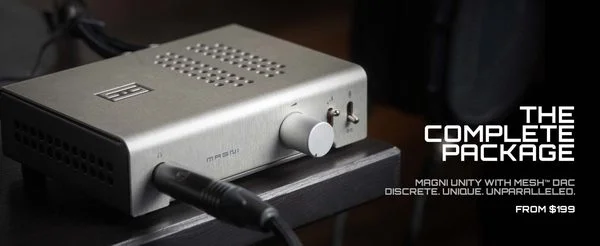
Schiit's direct replacement for the Asgard 3. The upgrade path if you want Schiit's mid-tier amp new, with warranty.
Rated at 2.5 W into 32Ω and 415 mW into 300Ω for $119. Enough for nearly every headphone the Asgard 3 was bought for.
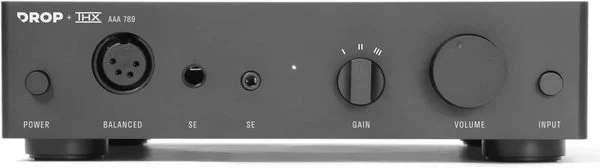
If you also need a DAC: one box, 6.4 W into 32Ω balanced and about $299.
| Asgard 3 (discontinued) | Asgard X | Magni (Unity) | Topping DX5 II | |
|---|---|---|---|---|
| Status | Discontinued | Current | Current | Current |
| Price (Oct 2026) | Used only ($199 base new) | $399 | $119 ($199 with DAC) | ~$299 |
| Power, 32Ω (rated) | 3.5 W | See Schiit | 2.5 W | 6.4 W balanced |
| DAC | Optional card | See Schiit | Optional card | Built in |
| Balanced headphone out | No | See Schiit | No | Yes |
Asgard X specs aren’t listed here because we haven’t verified them. Check Schiit’s product page.
Who should still buy a used Asgard 3: owners of 250–300Ω dynamics or mainstream planars who like a slightly warmer amp and find a working unit for clearly less than a new Magni plus DAC.
Who shouldn’t: anyone who needs balanced output, a quiet amp for very sensitive IEMs, or a warranty.
Buying a Used Asgard 3
- Ask which DAC card is installed, if any: none, the AK4490 card or the Multibit card. It changes what the unit is worth to you.
- Expect heat. A warm case is normal. A unit that smells hot or cuts out is not.
- Check the volume pot at low levels for scratchiness or channel imbalance.
- Make sure the correct AC wall adapter is included.
The Original Review: Why the Asgard 3 Was Popular
Class A Bias: Why It Matters
Most headphone amps run in Class AB: the output transistors share the work and switch off for part of the waveform. A Class A-biased stage keeps the output devices conducting across the whole signal at normal listening levels. It’s less efficient and runs hot, but it avoids crossover distortion at the levels you actually listen at.
The Asgard 3 used that approach at $199, which was unusual. Owners consistently describe it as fuller and warmer than op-amp designs like the Magni Heresy. The measurements agree that it was less clean on paper: Schiit specified an SNR of more than 115 dB, good but not record-breaking.
Build
The Asgard 3 is a full-width Schiit chassis in thick aluminium, larger than the Magni and Modi. The front has the volume knob and a 6.35 mm headphone jack. The back has RCA inputs, RCA preamp outputs, a gain switch and the slot for Schiit’s DAC card.
Power
Schiit’s published ratings:
- 5 W RMS per channel into 16Ω
- 3.5 W RMS per channel into 32Ω
- 2.5 W RMS per channel into 50Ω
- 300 mW RMS per channel into 600Ω
That’s far more than any mainstream dynamic needs and plenty for the HE400SE or Sundara. For a 300Ω HD 600, the math says it reaches well past safe listening levels with headroom left over.
The Sound, by Owner Consensus
The recurring descriptions on r/headphones and Head-Fi: a little more body in the lower midrange, bass that feels weightier, and treble that’s slightly smoother than on hyper-clean amps. Many HD 650 and HD 600 owners liked the combination, and some DT 990 Pro owners said it took the edge off the treble.
Those are reported impressions. The differences between competent amps are small, and the headphone matters much more. Our HD 650 amp guide , HD 600 amp guide and DT 990 Pro amp guide rank today’s options.
The DAC Card Option
Schiit sold the Asgard 3 as an amp only ($199), with an AK4490-based DAC card ($299 total) or with its Multibit card ($399 total). The internal card turned it into a single-box DAC/amp. Our Modi Multibit page explains what Schiit’s multibit conversion is and what replaced it.
Verdict
The Asgard 3 was a “stopping point” amp for a lot of people: plenty of power, a bit of warmth, a solid chassis and an easy DAC upgrade. It’s discontinued. Buy the Asgard X if you want the current Schiit equivalent, the Magni (Unity) if you want most of the capability for $119, or the Topping DX5 II if you need a DAC as well. For more options, see our best headphone amps under $300 .