Updated October 2026 · status and prices checked Oct 10, 2026.
Status in 2026
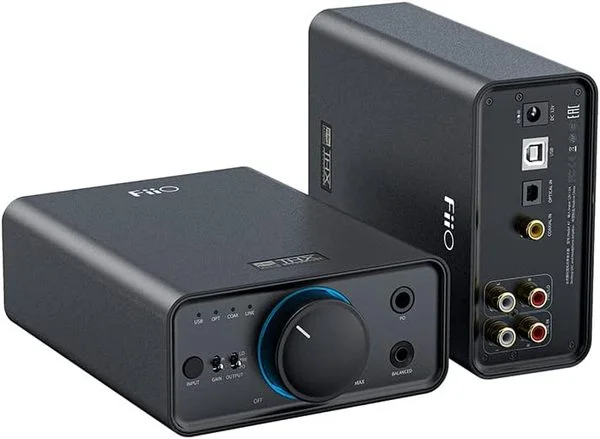
FiiO has discontinued the K5 Pro ESS. B&H and other retailers list it as discontinued, and FiiO’s current desktop lineup runs K11 R2R, K13, K13 R2R, K15 and K17. Any K5 Pro ESS you find now is used or old stock.
If you came here to buy one, here are the current alternatives. The original review is below.
Buy Instead
FiiO's current entry desktop DAC/amp. Adds a 4.4 mm balanced output and an R2R DAC for about $170.
More power for planars: 2 W into 32Ω balanced, dual AK4493SEQ, still sold on Amazon US for about $220.
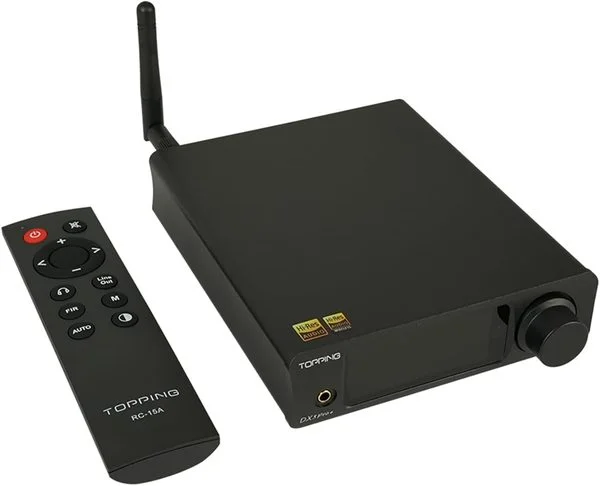
The step up: rated at 6.4 W into 32Ω balanced, with Bluetooth, for about $299.
| K5 Pro ESS (discontinued) | FiiO K11 R2R | FiiO K7 | Topping DX5 II | |
|---|---|---|---|---|
| Status | Discontinued | Current | Still sold | Current |
| Price (Oct 2026) | Used only | ~$170 | ~$220 | ~$299 |
| DAC | ES9038Q2M | R2R | Dual AK4493SEQ | Dual ES9039Q2M |
| Power, 32Ω (rated) | 1.5 W SE | ~1.3 W bal | 2 W bal / ~1.2 W SE | 6.4 W bal / ~2.2 W SE |
| Balanced headphone out | No | 4.4 mm | 4.4 mm | Yes |
Who should still buy a used K5 Pro ESS: someone who wants a simple single-ended desktop DAC/amp and finds one well under the price of a K11 R2R.
Who should skip it: anyone with balanced cables, anyone who wants a warranty, and anyone buying for power-hungry planars (the K7 or DX5 II suit them better).
Buying a Used K5 Pro ESS
- Check the volume knob at low levels for channel imbalance.
- Test USB, optical and coaxial inputs if you’ll use them.
- Make sure the power adapter is included.
- Compare with a new K11 R2R. If the gap is small, buy new.
The Original Review
The Case for the K5 Pro ESS
The budget desktop DAC/amp category was crowded. What set the K5 Pro ESS apart was power: FiiO rated it at 1.5 W into 32Ω, well above most one-box units at its price.
That headroom mattered for dynamics. Most listening sits at low to moderate volume, but transients in orchestral music and well-recorded drums need reserve. The K5 Pro ESS had more of it than its rivals.
DAC: ES9038Q2M
The K5 Pro ESS used ESS’s ES9038Q2M with an XMOS USB receiver, supporting PCM up to 768 kHz and DSD512 over USB. Optical and coaxial were limited to 96 kHz.
ESS chips have a reputation for a crisp, detailed presentation. Owners commonly describe ESS-based units as a touch brighter than AKM-based ones. With warm headphones like the HD 650 that’s usually welcome. With bright ones like the DT 990 Pro, some listeners found it tiring. These are reported impressions, and differences between competent DACs are small.
Amplifier Section
FiiO’s published figures: 1.5 W into 32Ω and about 20 V peak-to-peak into 300Ω, which works out to roughly 7 V RMS or about 165 mW. On an HD 600 (97 dB/V) that’s a peak of around 114 dB, which is more than loud enough.
There’s no balanced output. The single 6.35 mm jack and three gain steps cover IEMs through 300Ω headphones.
Inputs and Outputs
- Inputs: USB-B, optical, coaxial, RCA line in
- Outputs: 6.35 mm headphone, RCA line out
The RCA output lets it feed powered speakers or a separate amp, which made it a handy desk hub.
Who It Suited
- Owners of planars like the Sundara and HE400SE who wanted extra headroom. See today’s picks in the Sundara amp guide and HE400SE amp guide .
- 250–300Ω headphone owners. See the DT 990 Pro amp guide and HD 600 amp guide .
- Anyone who wanted one box feeding both headphones and speakers.
Verdict
The K5 Pro ESS was one of the most capable single-ended DAC/amps in its class. It’s discontinued. Buy the K11 R2R for the closest current FiiO, the K7 for more power, or the DX5 II for the step up. See Topping DX3 Pro+ vs FiiO K5 Pro ESS for how it compared with its main rival, and our best DAC/amp combos under $200 for a wider shortlist.