Updated October 2026 · status and prices checked Oct 10, 2026.
Status in 2026
The Modi Multibit is no longer in Schiit’s lineup. The original Modi Multibit and the later Modi Multibit 2 (sold for $299 in black and $319 in silver in 2022) have both been replaced. Schiit’s current lineup has one Modi, the Modi 5 at $149, and sells its multibit converter as a separate $200 Multibit DAC card for its modular products.
If you’re searching for this DAC to buy one, here’s what to get instead. The original review follows below.
Buy Instead
Schiit's current Modi: ES9018 chip, Schiit's Mesh filter and Unison 384 USB for $149. Same size and stack as the Multibit.
If the R2R character is what drew you to the Multibit: an R2R DAC with a headphone amp built in, about $170.
The bigger R2R step up (~$319) for listeners who want a desktop DAC/amp that can drive most full-size headphones.
| Modi Multibit 2 (discontinued) | Schiit Modi 5 | FiiO K11 R2R | FiiO K13 R2R | |
|---|---|---|---|---|
| Status | Discontinued | Current | Current | Current |
| Price (Oct 2026) | Used only ($299–319 new in 2022) | $149 | ~$170 | ~$319 |
| Conversion | Schiit multibit | ESS ES9018 + Schiit Mesh filter | R2R | R2R |
| Headphone amp | No | No | Yes | Yes |
| USB | Unison USB | Unison 384 | USB | USB |
| Best for | Used-market bargain hunters | A new Schiit stack | One-box R2R on a budget | One-box R2R step up |
Who should still look for a used Multibit: someone who already owns a Magni and specifically wants Schiit’s multibit sound, at a price well below a new Modi 5 plus a little.
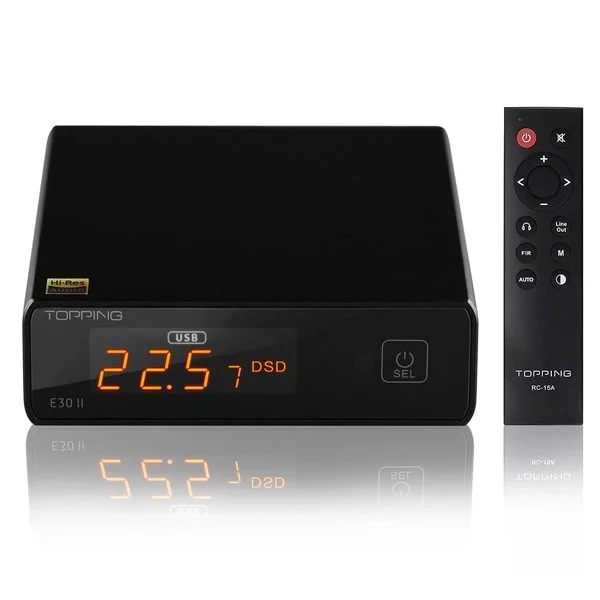
Who should skip it: anyone choosing by measurements or buying their first DAC. The Modi 5 or a Topping E30 II is the cleaner, cheaper answer.
Buying a Used Modi Multibit
- Know which one you’re looking at. The Modi Multibit 2 has Schiit’s Unison USB. Earlier Modi Multibit units used older USB inputs. The 2 is the one to want.
- Test all three inputs (USB, optical, coaxial) if you plan to use them.
- Make sure the AC wall adapter is included.
- Compare with new. A new Modi 5 is $149 with warranty. Pay used prices only for a clear saving.
The Original Review: Why People Bought the Multibit
The Measurements vs Listening Divide
The Modi Multibit sits in the middle of the longest-running argument in this hobby: do measurements capture everything you hear?
By SINAD, THD and noise floor, current delta-sigma DACs that cost less, including Schiit’s own Modi 5, measure cleaner than Schiit’s multibit designs. Published measurements are clear on that.
And yet owners on r/headphones and Head-Fi have described the Modi Multibit as warmer, more natural and easier to listen to for years. Whether that reflects audible differences in R2R distortion or expectation and preference, nobody has settled. What is consistent is that a lot of people who bought one stopped shopping for DACs.
R2R Technology: A Brief Explanation
Most modern DACs use delta-sigma conversion. They oversample the incoming audio by a large factor and use noise shaping to move quantisation noise above the audible range, where it’s filtered out. It’s cheap to build into silicon and measures very well.
A multibit ladder DAC converts each sample directly with a network of precision resistors. Schiit says its own digital filter keeps the original samples intact. The two approaches produce different distortion profiles. How audible those differences are at modern levels is debated, but many experienced listeners say the two sound different.
Schiit’s Unison USB
The Modi Multibit 2 used Schiit’s in-house Unison USB input instead of an off-the-shelf USB receiver. Schiit designed it to be robust against noisy computer USB ports, so most users could plug in and stop worrying about isolators. The current Modi 5 uses the newer Unison 384 version.
Sound Character, by Owner Consensus
The descriptions owners give are consistent: more body in the lower midrange, weightier vocals, a smoother and slightly less forward treble than bright ESS-based DACs. If you’ve found some delta-sigma DACs cold or clinical, that’s the reason people pointed you here.
Treat these as reported impressions, not measured facts. Volume-match carefully if you compare DACs yourself, because a small level difference changes what people hear.
The Schiit Stack
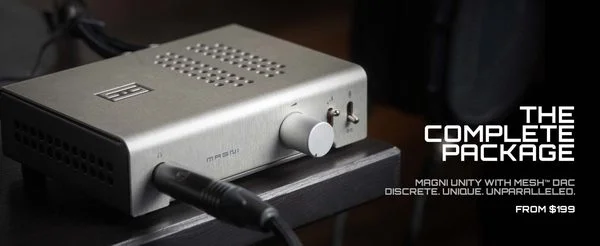
The Multibit was designed to sit on a Magni amp. In 2026 the matching stack is the Modi 5 with the Magni (Unity) ($119; see our Magni Heresy replacement guide ), or a single Magni with the DAC card. Our Modi generations comparison lays out every Modi and Multibit model and which ones are still sold.
For full-size headphones, the amp matters more than the DAC. See the HD 600 amp guide and the HD 650 amp guide for current picks.
Verdict
The Modi Multibit was a niche product for a large audience: listeners who’d tried technically excellent DACs and felt underwhelmed. It’s discontinued. Buy the Modi 5 if you want a Schiit DAC today, or a FiiO K11 R2R if you want R2R character and an amp in one box. For a wider shortlist, see our best DACs under $200 .