Updated October 2026 · status and prices checked Oct 10, 2026.
Status in 2026
Retailers now list the Topping DX3 Pro+ as discontinued. Topping hasn’t announced it formally, but its current one-box pick is the DX5 II, which launched in June 2025 at $299. If you find a DX3 Pro+ for sale, it’s likely leftover stock or used.
Below is what to buy in its place, then the original review.
Buy Instead
The DX3 Pro+'s successor in Topping's range: dual ES9039Q2M, Bluetooth, balanced output and 6.4 W into 32Ω for about $299.
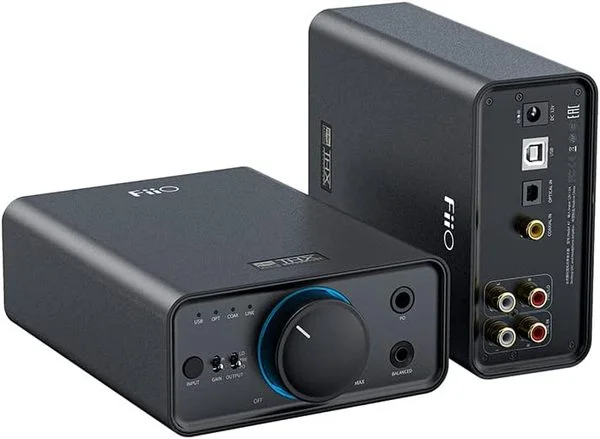
Closest to the DX3 Pro+'s old price: about $170, with an R2R DAC and a 4.4 mm balanced output.
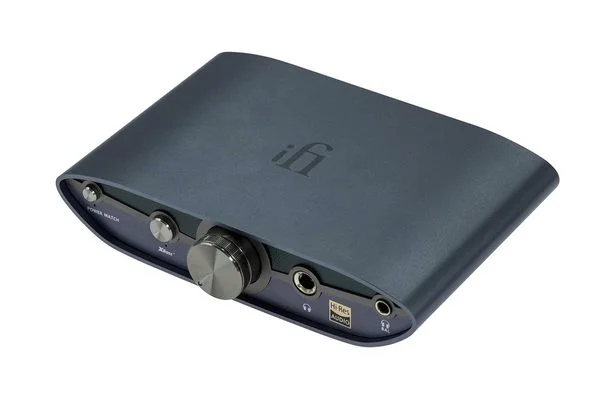
A simple USB-C DAC/amp for IEMs and easy headphones, with 4.4 mm balanced out, about $229.
| DX3 Pro+ (discontinued) | Topping DX5 II | FiiO K11 R2R | iFi Zen DAC 3 | |
|---|---|---|---|---|
| Status | Listed discontinued | Current | Current | Current |
| Price (Oct 2026) | Leftover / used | ~$299 | ~$170 | ~$229 |
| DAC | ES9038Q2M | Dual ES9039Q2M | R2R | Burr-Brown |
| Power, 32Ω (rated) | ~1.8 W SE | 6.4 W bal / ~2.2 W SE | ~1.3 W bal | up to ~390 mW |
| Balanced headphone out | No | Yes | 4.4 mm | 4.4 mm |
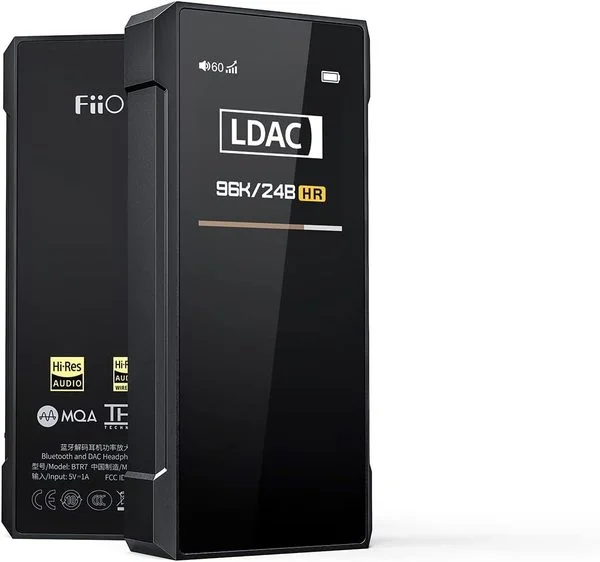
| Bluetooth | LDAC | Yes | No | No |
Who should still buy a DX3 Pro+: someone with easy-to-drive headphones who wants LDAC and a remote, and finds one clearly below the DX5 II’s price.
Who should skip it: owners of balanced cables, power-hungry planars or 300Ω headphones they like to play loud.
The Original Review
The ES9038Q2M Inside
The DX3 Pro+ used ESS’s ES9038Q2M, a high-performance DAC chip supporting 32-bit/768 kHz PCM and DSD512 over USB. ESS-based units have a reputation for a crisp, detailed presentation, which owners describe either as “clean” or “a bit bright” depending on their headphones.
Build and Controls
The DX3 Pro+ is compact, with a multi-function knob for volume and input selection, a 6.35 mm headphone output and a small display. The back has USB-B, optical and coaxial inputs, the Bluetooth antenna and RCA line outputs. The remote handles volume and input switching from your chair.
Bluetooth LDAC
The DX3 Pro+ used a Qualcomm QCC5125 Bluetooth 5.0 receiver with LDAC, aptX HD, aptX LL, aptX, AAC and SBC. LDAC at 990 kbps is one of the highest-bitrate Bluetooth codecs available. Most Android phones support it; iPhones use AAC. For playing music from a phone through a desktop setup without a cable, that was the DX3 Pro+’s best feature.
Headphone Amp
Topping’s published specs, as listed by retailers: about 1.8 W into 32Ω, about 900 mW into 64Ω and 160–250 mW into 300Ω, with +6 dB and +19 dB gain settings.
- IEMs: low gain is quiet and clean.
- ATH-M50x, DT 770 Pro 80Ω: far more power than needed. See the ATH-M50x amp guide and DT 770 Pro amp guide .
- HiFiMAN HE400SE: fine at normal levels. See the HE400SE amp guide .
- Sennheiser HD 600: 7–8.7 V RMS into 300Ω reaches about 114–116 dB peaks on paper, loud but with less reserve than bigger amps. See the HD 600 amp guide .
Who Shouldn’t Buy One
- Balanced cable users: there’s no balanced headphone output. The DX5 II, K11 R2R and Zen DAC 3 all have one.
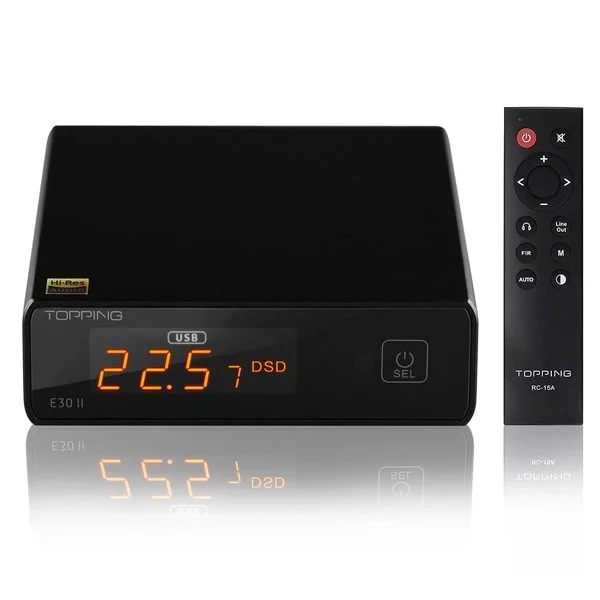
- Separates builders: if you already own an amp, a standalone DAC like the Topping E30 II is the better buy.
- Power-hungry planar owners: the DX5 II or FiiO K7 (2 W into 32Ω balanced, ~$220) suit them better.
Verdict
The DX3 Pro+ was one of the best small all-in-ones for easy headphones, thanks to LDAC and a remote. It’s now listed as discontinued. Buy the DX5 II for the full upgrade, or the K11 R2R if you want to stay near the old budget. Compare it against the alternatives in iFi Zen DAC 3 vs DX3 Pro+ and DX3 Pro+ vs FiiO K7 , or see our best DAC/amp combos under $300 .