Our Top Picks
Updated October 2026 · prices checked Oct 10, 2026. Sennheiser raised its US list prices in 2025–26; the figures below are current sale prices.
The classic jazz headphone: warm midrange, natural timbre, and a favourite tube-amp match.
More neutral than the HD 650. Better for detail-focused listening and modern, clean recordings.
HD 650-family sound at $219.95 while Sennheiser US clears the last stock after Drop closed.
Best budget jazz headphone: semi-open, warm, and runs from a laptop or phone.
How these were chosen: amperheads does not own or test headphones. Picks follow manufacturer specs, power math, published measurements and long-running owner consensus on r/headphones and Head-Fi.
What Jazz Demands from Headphones
Jazz is a particularly revealing genre for headphone quality because of:
- Midrange presence: Upright bass, piano, saxophone, trumpet, and brushed drums all live primarily in the midrange. A recessed midrange (V-shaped headphone) pushes these instruments back and distorts the ensemble balance.
- Acoustic space: Good jazz recordings capture the room — the decay of a piano note, the ambience of the recording studio or club. Open-back headphones reproduce this spatial information more naturally than closed-back.
- Dynamic contrast: Jazz improvisation involves rapid changes from soft passages to intense bursts — a good headphone tracks these without compressing the dynamic range.
- Timbre accuracy: A saxophone should sound like a saxophone. A warm, natural midrange preserves the harmonic overtones that define each instrument’s character.
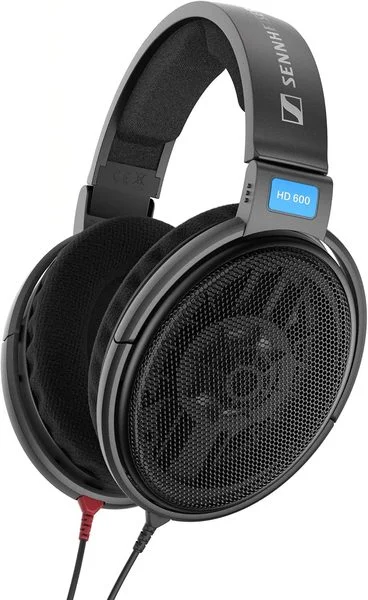
Best Overall: Sennheiser HD 650
Price: ~$380 on sale ($579.95 list) | Impedance: 300Ω | Character: Warm, musical
The HD 650 is the most recommended headphone for jazz listening in the audiophile community. Its warm, rich midrange gives upright bass its characteristic woody resonance, saxophone its full-body warmth, and piano its hammer-on-string texture. The slightly rolled-off treble means no harshness on trumpet or cymbal — just presence and detail without fatigue.
The HD 650 requires a dedicated amplifier. The current Schiit Magni ($119) or FiiO K11 R2R (~$170) drives it well; an output-transformerless tube amp (Schiit Valhalla 3, or budget Chinese OTL amps like the Darkvoice 336SE) is the combination many owners describe as their favourite for jazz. The HD 650 amp guide has the voltage math.
Budget alternative: the HD 6XX is the same family, still sold as last stock by Sennheiser US at $219.95 after Drop closed in March 2026.
Best for: Acoustic jazz, bebop, hard bop, standards, vocal jazz
See today's price for the Sennheiser HD 650 on Amazon ↗More Neutral Alternative: Sennheiser HD 600
Price: ~$350 on sale ($499.95 list) | Impedance: 300Ω | Character: Neutral, precise
The HD 600 is slightly brighter and more analytical than the HD 650. For jazz listeners who want to hear more inner detail — the texture of bowed bass, the articulation of piano runs, the reed of a clarinet — the HD 600’s precision delivers it without the HD 650’s warmth softening the edges.
Both the HD 600 and HD 650 are excellent jazz headphones; the choice comes down to warmth vs precision preference.
Best for: Contemporary jazz, fusion, ECM-style recordings with high production quality
See today's price for the Sennheiser HD 600 on Amazon ↗Best Budget Jazz Headphone: AKG K240 MKII
Price: budget (check current) | Impedance: 55Ω | Character: Semi-open, warm
The AKG K240 MKII is a legendary semi-open headphone with a warm, mid-forward character that suits jazz exceptionally well. It costs a fraction of the Sennheiser options and doesn’t require a dedicated amplifier. The K240’s soundstage is wide for its price, and its midrange presentation is more natural than most headphones in its price range.
The K240 won’t match the HD 600 or HD 650 in imaging precision or bass extension, but for casual jazz listening from a laptop or phone, it punches far above its price.
Best for: Budget jazz listening; laptop or casual setups; introducing someone to jazz on headphones
Semi-Open Alternative: Beyerdynamic DT 880 Pro
Price: varies by retailer | Impedance: 250Ω | Character: Semi-open, balanced
The DT 880 Pro occupies the space between open and closed — it leaks some sound and admits some ambient noise, but less than a fully open design. Its frequency response is more neutral than the HD 650 but warmer than the DT 990 Pro. For jazz listeners who want controlled bass and detailed midrange without the HD 650’s warmth, it is the middle ground.
The DT 880 Pro’s semi-open design produces a slightly more intimate soundstage than the HD 600 — instrument positions feel close rather than spread wide. Some listeners prefer this for small-group jazz recordings.
Best for: Piano trio, chamber jazz, recordings with intimate room acoustics
See today's price for the Beyerdynamic DT 880 Pro on Amazon ↗Recommended System for Jazz
Entry setup: AKG K240 MKII, no amp needed. Runs from any laptop or phone.
Best value while it lasts: HD 6XX ($219.95, Sennheiser US last stock) + Schiit Magni with DAC card ($199) = about $419. HD 650-family sound for far less than a new HD 650.
See today's price for the Sennheiser HD 6XX from Sennheiser ↗ See today's price for the Schiit Magni (Unity) on Amazon ↗ See today's price for the Schiit Magni (Unity) from Schiit ↗
The classic: HD 650 (~$380 on sale) + an OTL tube amp such as the Schiit Valhalla 3 + any clean DAC (the Schiit Modi 5 is $149). Warm, relaxed, and the pairing jazz listeners have recommended for years.
Check the latest price for the Sennheiser HD 650 on Amazon ↗ See today's price for the Schiit Valhalla 3 from Schiit ↗ See today's price for the Schiit Modi 5 on Amazon ↗ See today's price for the Schiit Modi 5 from Schiit ↗
Neutral alternative: HD 600 ($350 on sale) + FiiO K11 R2R ($170) = about $520. One box for DAC and amp; precise and revealing.
Check the latest price for the Sennheiser HD 600 on Amazon ↗ See today's price for the FiiO K11 R2R on Amazon ↗
Recordings That Reveal the Differences
These recordings are worth auditioning any jazz headphone with. Each one stresses a specific weakness:
| Track | What it exposes |
|---|---|
| Bill Evans Trio — “Waltz for Debby” (live) | Room ambience and audience noise placement; closed-in headphones flatten the Village Vanguard |
| Charles Mingus — “Haitian Fight Song” | Upright bass texture; on a V-shaped headphone the bass line turns into an indistinct rumble |
| John Coltrane — “Blue Train” | Upper-midrange honk; a shouty headphone makes the horn section piercing |
| Oscar Peterson — “You Look Good to Me” | Bowed intro then walking bass; tests the move from arco texture to pizzicato attack |
| Sarah Vaughan — “Lullaby of Birdland” | Vocal timbre; recessed mids push her voice behind the band |
Owner reports line up with the tunings: the HD 650 is the one most often described as “musical” on this kind of material, the HD 600 as the most honest, and the K240 MKII as good on ambience and vocals but short on low-end texture.
Picks by Jazz Subgenre
| You mostly listen to | Pick | Why |
|---|---|---|
| Classic quartets, standards, vocal jazz | HD 650 (or HD 6XX while stock lasts) | Warmth flatters 1950s–60s recordings |
| Modern/fusion, ECM label, hi-res remasters | HD 600 | Precision suits clean modern production |
| Piano trios, chamber jazz | DT 880 Pro | Intimate semi-open staging |
| Big band, swing | AKG K712 Pro | Widest stage for large ensembles |
| Everything, on a budget | K240 MKII | Most of the midrange character for a fraction of the price |
What to Avoid for Jazz
- V-shaped tuning (DT 770 Pro, gaming headsets, beats-style headphones): Depressed midrange makes piano and saxophone sound distant and thin
- Noise-cancelling headphones: ANC processing alters frequency response and kills the natural ambience that good jazz recordings capture
- Closed-back headphones: The limited soundstage compresses the spatial information in jazz recordings
- Heavy bass emphasis: Jazz bass is acoustic upright bass — it should sound woody and plucked, not electronic and boosted
Related: Best headphones for classical music · Sennheiser HD 650 review · Best amp for HD 650 · Best headphones under $300