Research-based review, updated October 2026 · prices checked Oct 10, 2026. AmperHeads doesn’t bench-test or audition gear: this page combines published specs, our power math, third-party measurements and long-running owner reports. How we research and rate gear .
See today's price for the Audio-Technica ATH-M50x on Amazon ↗Why Everyone Recommends It (And Whether That’s Still Warranted)
The Audio-Technica ATH-M50x has held an odd position in headphone culture for over a decade: it’s the most-recommended beginner headphone on Reddit, YouTube and audio forums, and one of the most debated headphones among people who know the space well. The debate isn’t about whether it’s good. It’s about whether the volume of recommendations has inflated expectations beyond what a ~$159 closed-back can deliver.
My read of the evidence: the ATH-M50x is a very good headphone for its price that has been mythologised into territory it doesn’t occupy. Buy it for what it does well (a portable design, an excellent cable system and a lively, clear sound) and owner reports suggest you’ll be satisfied. Buy it expecting a revelation and you may be disappointed next to a DT 770 Pro or an AKG K371.
Sound Signature: “Studio Monitor” Unpacked
Audio-Technica markets the M50x as a studio monitor. That label deserves some scrutiny. Published frequency-response measurements show a consumer-friendly tilt rather than a flat reference curve.
Bass: Measurements show a mid-bass emphasis that adds warmth and body. Owners rarely describe it as boomy, but it is there. For music listening, that warmth is pleasant. For mixing, it means your low-end decisions are made on a response that doesn’t match most playback systems.
Midrange: The lower midrange measures slightly recessed, which owners describe as a touch of thinness on male vocals and acoustic instruments. Upper-midrange presence is good, so voices sit clearly in the mix. The net effect is clear and forward rather than warm and full.
Treble: The source of the M50x’s reputation for detail. Treble is lifted relative to a neutral target, and owners describe cymbals and vocal breaths as crisp and clear. It’s generally reported as less fatiguing than the DT 770 Pro, whose treble peak measures more prominently.
Imaging and soundstage: Owners consistently describe imaging as precise, with a closed, intimate stage typical of a sealed headphone.
Build Quality and Design
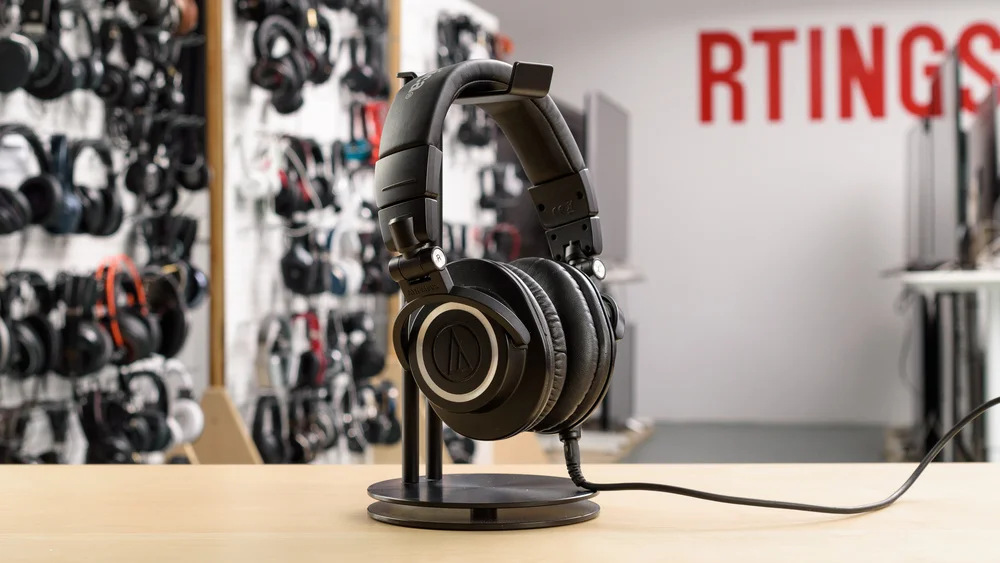
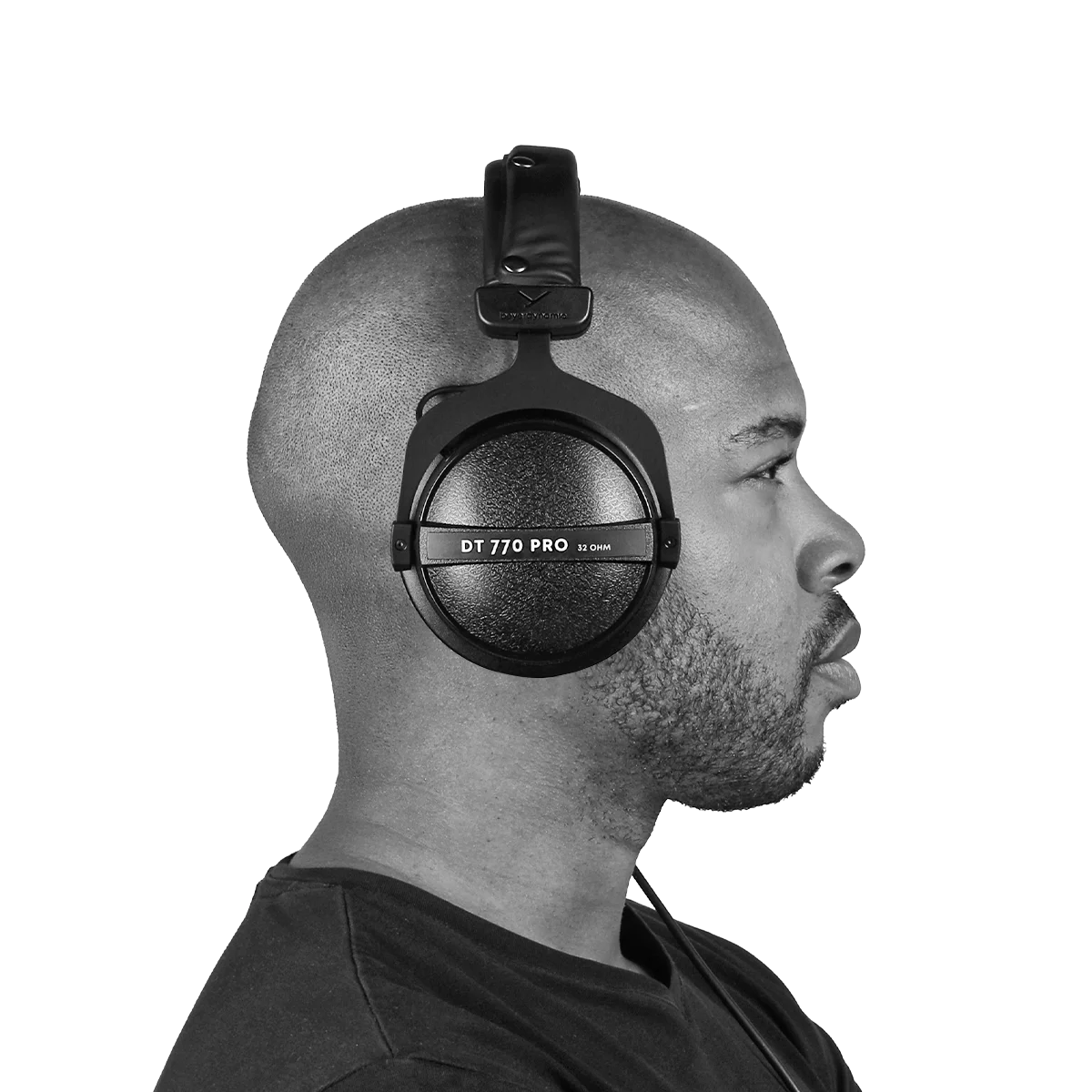
The ATH-M50x is mostly plastic, which surprises people who expect the build to match the reputation. Owners describe the plastic as thick and solid, but it looks less premium than the DT 770 Pro’s metal yoke or the AKG K371.
The swivel mechanism is the structural win. Each cup rotates 90 degrees so the headphone folds flat for transport, something the DT 770 Pro can’t do. In a bag, it takes up far less space.
Comfort is the most common owner complaint. The headband padding is fine for an hour or two, after which some owners report a hot spot on top. The pleather pads seal well but run warm. Aftermarket velour pads are a popular fix, though they change the sound.
The Detachable Cable System
The M50x ships with three cables: a short straight cable for portable use, a long straight cable for studio use, and a coiled cable for the desk, with a 6.35 mm adapter for studio gear. The headphone end uses a twist-lock connector. Some owners report it loosening over time, but failures are uncommon in owner reports.
This is the most practical advantage the M50x has over the DT 770 Pro, whose cable is fixed. If a cable fails, or you want a different length, replacements are cheap and widely available.
Amplification Requirements
The ATH-M50x needs no dedicated amplifier. Using Audio-Technica’s published 38Ω and 99 dB/mW:
- 110 dB peaks need about 11 dB above 1 mW, so roughly 13 mW.
- At 38Ω that’s about 0.7 V RMS and under 20 mA.
Phones with a headphone jack, USB-C dongles, laptops and game controllers all deliver that. A desktop DAC/amp may lower the noise floor, but the M50x doesn’t scale much with upstream gear the way a 300Ω Sennheiser HD 600 does. If you want one box anyway, our current pick is the FiiO K11 R2R (~$170); otherwise spend the money on a better headphone later.
Isolation and Leakage
The closed-back pleather seal gives useful passive isolation for offices, cafés and public transport, and leakage at moderate volume is low according to owner reports. It has no active noise cancelling. If ANC is the priority, you want a different kind of headphone altogether.
Who Should NOT Buy the ATH-M50x
- Long desktop sessions: Owners consistently find the DT 770 Pro’s velour pads more comfortable over three to four hours. For all-day work-from-home use, buy the DT 770 Pro.
- Professional mixing: The measured mid-bass lift makes the M50x a poor reference. The Sony MDR-7506 (under $100) or AKG K240 are more common studio choices.
- People with large ears: The cups are small for an over-ear design, and many owners report the pads resting on the ear. Try before you buy if you can.
- Those wanting the most neutral closed-back: AKG tuned the K371 toward the Harman target, and it measures closer to neutral than the M50x, though it lacks the M50x’s accessory ecosystem.
The Honest Summary
The ATH-M50x is a good headphone whose reputation now slightly exceeds the product. It offers clear treble, a folding design, an excellent cable system, and a sound that’s enjoyable and accurate enough for casual production work. At ~$159 (Oct 2026) it faces competition it didn’t in 2014: the AKG K371, Beyerdynamic DT 700 Pro X and DT 770 Pro all compete directly.
Buy the ATH-M50x if portability, detachable cables and amp-free operation matter to you. Buy the DT 770 Pro if you mostly listen at a desk and want more comfort and bass impact.
Check the latest price for the Audio-Technica ATH-M50x on Amazon ↗Looking for amp recommendations? See our complete Best Amplifier for Audio-Technica ATH-M50x for budget to high-end pairings with this headphone.
Related: ATH-M50x vs DT 770 Pro · Sony MDR-7506 vs ATH-M50x · Sony MDR-7506 review · Best closed-back headphones under $200