Research-based review, updated October 2026 · prices checked Oct 10, 2026. AmperHeads doesn’t bench-test or audition gear: this page combines published specs, our power math, third-party measurements and long-running owner reports. How we research and rate gear .
Status in 2026: The MKII Has Replaced It
Beyerdynamic now sells the DT 1990 Pro MKII, and retailers are clearing out the original DT 1990 Pro. Everything below describes the original, because that is what most owner reports and published measurements cover. The MKII is the updated version and the one Beyerdynamic currently sells; we haven’t found enough measurement data on it yet to describe its tuning differences, so we won’t guess.
My advice: if you’re paying full price, buy the MKII. Buy a leftover original only if a clearance deal undercuts the MKII by a clear margin.
See today's price for the Beyerdynamic DT 1990 Pro MKII on Amazon ↗What Happens When Beyerdynamic Takes the DT 990 Seriously
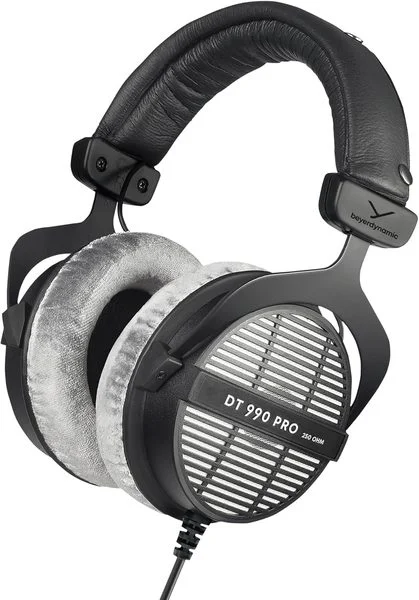
The DT 990 Pro has been a studio staple since the 1980s: bright, wide and capable, but built from plastic around an old driver design. The DT 1990 Pro is Beyerdynamic’s answer to what the DT 990 could be with its Tesla driver technology, premium materials and a modern accessory pack.
It is not an incremental DT 990. Owners and reviewers describe it as a different class of headphone: more resolving, more refined, sharing only the open, wide-staging DNA.
Design and Build Quality
The DT 1990 Pro uses more metal and higher-grade materials than the DT 990 Pro, with tool-free swappable ear pads and a detachable cable. Owner reports on long-term durability are good.
The box includes:
- Two sets of ear pads: Analytical and Balanced
- Two detachable cables: one coiled and one straight
- A hard carrying case
At 370g it is heavier than the 250g DT 990 Pro. Owners describe the weight as well distributed with moderate clamp, but many notice it after a couple of hours.
Tesla Driver Technology
“Tesla” is Beyerdynamic’s name for its high-flux-density magnet system: a stronger magnetic field across the voice coil gap. The practical effects are higher sensitivity (102 dB/mW here, against 96 dB/mW for the 250Ω DT 990 Pro) and better driver control. Owners and reviewers consistently credit the DT 1990 Pro with tighter bass transients and better low-level detail than the DT 990 Pro; the sensitivity gain is plain on the spec sheet.
Sound Quality
Bass
Published measurements show bass that extends deep for an open-back dynamic headphone, with moderate quantity. It is not bass-heavy, but owners describe what is there as tight and well controlled, and better textured than the DT 990 Pro’s.
Midrange
This is where owners say it most clearly outclasses the DT 990 Pro. Without the 990’s V-shaped dip, vocals and instruments sit further forward with more texture. A slight upper-midrange lift adds presence to lead vocals and brass.
Treble
The DT 1990 Pro keeps Beyerdynamic’s characteristic high-treble emphasis. With the Analytical pads it is prominent: sibilance stands out and aggressive masters can tire you quickly.
The Balanced pads tame the peak noticeably. Many owners use the Balanced pads daily and switch to Analytical only for critical work. That flexibility is one of the headphone’s most practical advantages.
Soundstage and Imaging
Imaging is the DT 1990 Pro’s best-known strength. Owner consensus and professional reviews put it among the most precise open-backs in its class, with convincing depth on well-recorded material. For gaming that means accurate direction; for music, a believable sense of space.
Amplifier Pairing
The 250Ω rating makes the DT 1990 Pro look hard to drive, but its 102 dB/mW sensitivity changes the math. For 110 dB peaks it needs about 6.3 mW, which is roughly 1.3 V RMS at 5 mA; with 6 dB of headroom, about 2.5 V. That is beyond a phone but trivial for any desktop amp.
- FiiO K11 R2R (~$170): our default value pick, DAC and amp in one box
- Schiit Magni (Unity, $119) or JDS Labs Atom Amp 2 (~$129): clean, budget amp-only options
- Topping DX5 II (~$299): a step-up DAC/amp with balanced output, for owners who want one box they won’t outgrow
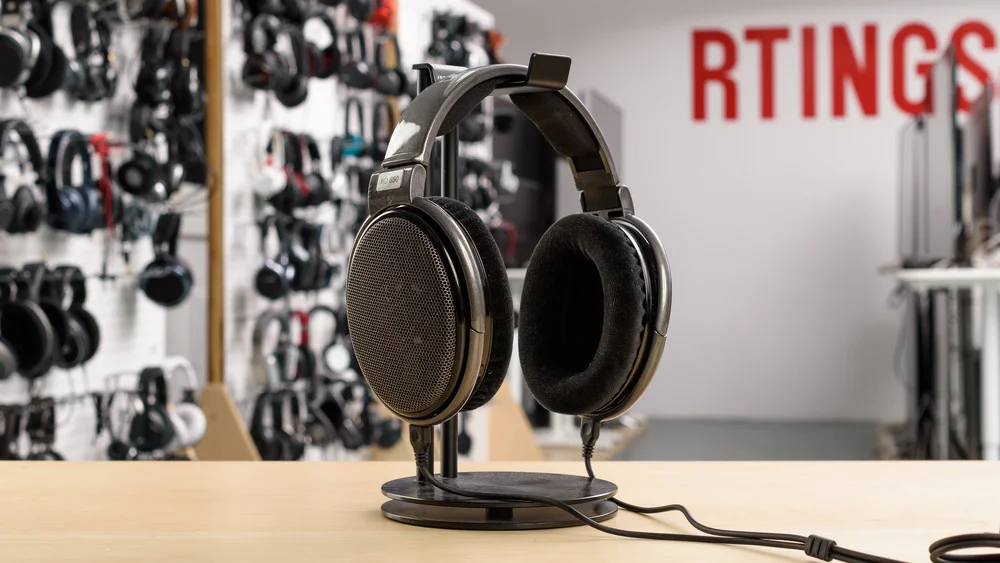
Owners generally pair it with clean, low-noise solid-state amps; its analytical tuning doesn’t gain from the warm tube amps that suit the HD 650.
DT 1990 Pro vs Competing Headphones
| Headphone | Status (Oct 2026) | Character | Advantage |
|---|---|---|---|
| DT 990 Pro 250Ω | Current, ~$170–200 | V-shaped, bright | Price |
| DT 1990 Pro (original) | Superseded, clearance | Analytical, detailed | Detail, imaging, build |
| DT 1990 Pro MKII | Current | Updated version | The one Beyerdynamic sells |
| Sennheiser HD 650 | Current, ~$380 on sale | Warm, musical | Musicality, low fatigue |
| HiFiMAN Sundara | Current | Neutral, planar | Value, neutrality |
Final Verdict
The DT 1990 Pro earned its reputation: excellent detail and imaging, plus a dual-pad system that makes the treble manageable. It has now been replaced. Buy the DT 1990 Pro MKII if you want this kind of sound new at full price, and treat a leftover original as a deal-only purchase.
Check the latest price for the Beyerdynamic DT 1990 Pro MKII on Amazon ↗Looking for amp recommendations? See our complete Best Amplifier for Beyerdynamic DT 1990 Pro — budget to high-end pairings with this headphone.
Related: Beyerdynamic DT 990 Pro review · HiFiMAN Sundara review