Research-based review, updated October 2026 · prices checked Oct 10, 2026. AmperHeads doesn’t bench-test or audition gear: this page combines published specs, our power math, third-party measurements and long-running owner reports. How we research and rate gear .
Considering the newer DT 770 Pro X? It is a 48Ω version with a detachable cable; DT 770 Pro vs DT 770 Pro X compares the two.
Four Decades and Still the Reference
The Beyerdynamic DT 770 Pro was introduced in 1985. That isn’t a historical footnote, it’s the point. A headphone that has stayed in professional production for forty years, largely unchanged, is telling you it does the core job. Recording engineers use it for tracking because the closed back keeps the click track out of the microphones. Gamers use it because the V-shaped tuning makes games feel cinematic. Plenty of people buy it simply because nothing closed at the price is as well-liked by its owners.
In 2026 there are more neutral, better-measuring closed-backs around ~$170. The DT 770 Pro isn’t the measurement champion. It stays the default closed-back recommendation because the total package of tuning, build, isolation, comfort and serviceability is still hard to beat at the price.
The V-Shaped Sound Signature
Published frequency-response measurements of the DT 770 Pro show a clear V shape: elevated bass, a midrange that sits slightly lower, and a lifted treble. Beyerdynamic has kept this tuning across revisions, so the long run of owner reports on r/headphones and Head-Fi applies to current units.
Bass: The low end is what owners mention first. Measurements show bass that extends deep for a closed dynamic headphone, with a mid-bass lift that gives kick drums and synth basslines physical weight. It is warm rather than tight. Gamers and casual listeners tend to love it; mixing engineers tend to distrust it. Both are right for their purposes.
Midrange: The mids are its weakest area. Vocals and guitars sit slightly behind the bass and treble, which is the V shape. Voices stay clear, but next to a Sennheiser HD 600 or AKG K371 owners describe the DT 770 Pro as hollow in the middle.
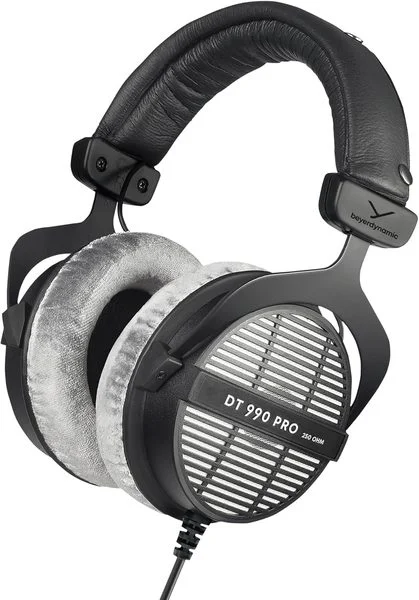
Treble: Measurements show the treble peak Beyerdynamic headphones are known for, milder here than on the DT 990 Pro. It brings out cymbal detail and makes the headphone sound lively. It is also the most common complaint: on bright, compressed recordings many owners find it fatiguing over long sessions. A narrow EQ cut at the peak is the usual fix.
Build Quality
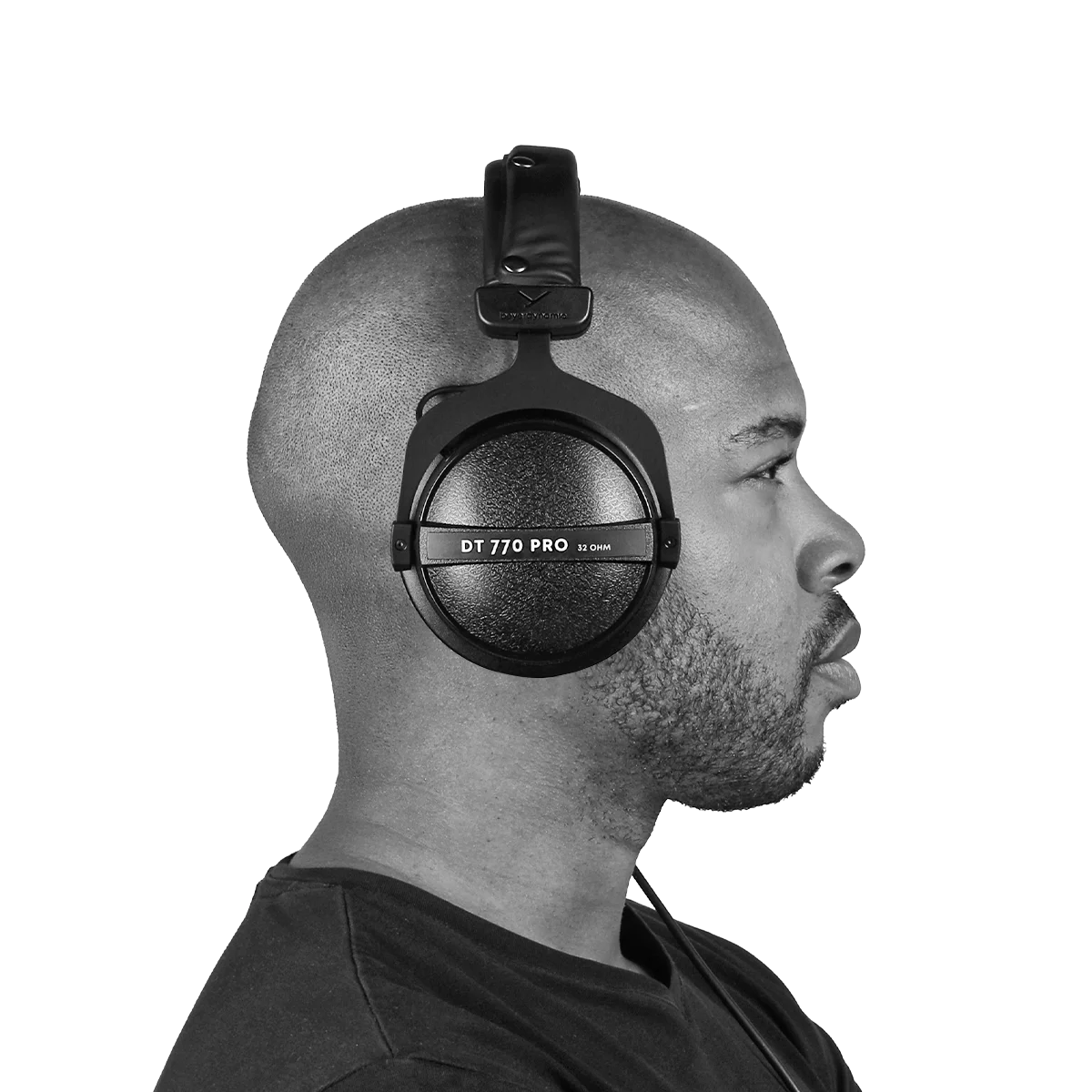
The DT 770 Pro is built for daily studio use. The headband uses a metal slider, the cups are sturdy polymer, and the coiled cable exits the left cup through a reinforced strain relief.
The ear pads, headband cushion and cable assembly are all available as spare parts, which is why owners commonly report studio units still working after a decade or more.
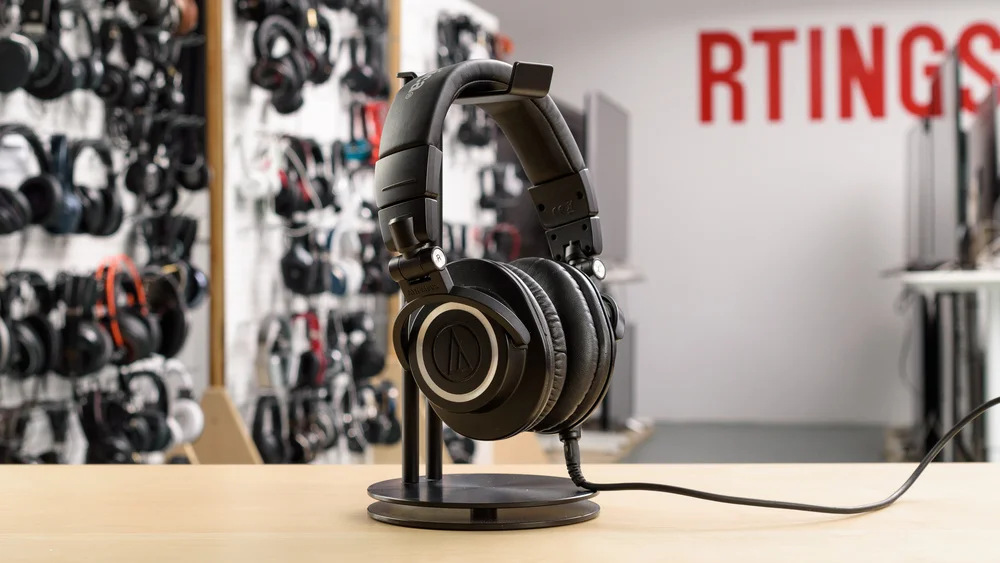
The one real complaint is the fixed coiled cable. On a desk the coil keeps it tidy, but it means you’re committed to this cable for the life of the headphone; if it fails at the cup, you’re soldering. The ATH-M50x, AKG K371 and Beyerdynamic’s own DT 700 Pro X all have detachable cables at nearby prices.
Comfort and Fit
The large velour pads sit around the ear rather than on it, and owner consensus is that the DT 770 Pro is one of the most comfortable closed-backs for long sessions. The clamp is firm enough to hold the seal without the headaches some studio headphones cause. Velour breathes better than pleather, though any closed-back runs warmer than an open one.
One caveat that comes up repeatedly in owner threads: the cups are shallow for some ears. If your ears are large or stick out, they may touch the driver cover. The AKG K371 has deeper pads and is worth a look if that applies to you.
Isolation
The closed back blocks a useful amount of keyboard clatter, household noise and street sound, and leaks little at moderate volume, so it works in a shared office. It won’t match in-ear monitors or active noise cancelling, and it won’t silence a construction site. For tracking, the low leakage is what matters, and that is why studios standardised on it.
Which Impedance Version to Buy
The DT 770 Pro is sold in 80Ω and 250Ω versions; a 32Ω version also exists in some markets. Beyerdynamic rates them all at 96 dB/mW, so the choice is about voltage.
80Ω: About 1.4 V for 110 dB peaks. Most phones and laptops manage around 1 V, so the 80Ω gets loud from a decent USB-C dongle or console controller and is close from a laptop jack. This is the right version for anyone without a desktop amp.
250Ω: About 2.5 V for 110 dB peaks, which no phone can deliver. On a desktop amp it is the slightly better-behaved version, mainly because it is far less sensitive to the source’s output impedance. Owners describe the difference as a refinement, not a transformation. If you go this way, the FiiO K11 R2R (~$170) is our default value pick, with the Schiit Magni (Unity, $119) as the budget option.
The full math is in our DT 770 Pro 80 ohm vs 250 ohm guide , and amp tiers are in best amp for DT 770 Pro .
If you never want an amp and do want a detachable cable, the low-impedance DT 770 Pro X (about $200) is the version to look at.
Use Cases: Where the DT 770 Pro Fits
Studio tracking and recording: Its professional origin. Low leakage means no bleed into microphones, and the build survives daily handling. The 80Ω version is the common studio choice.
Gaming: The V-shaped tuning suits games: weight on explosions and vehicles, treble lift for footsteps and ambient cues, and isolation for immersive single-player sessions. Competitive players often prefer the wider stage of the open DT 990 Pro.
Desk listening: Electronic, hip-hop, rock, metal and pop suit the bass and treble emphasis. Classical and jazz are the exceptions: the dipped midrange makes orchestral textures and upright bass thinner than they should be.
Who Should NOT Buy the DT 770 Pro
- Mix engineers: A V-shaped response pushes you to under-mix low end and over-brighten highs. A flatter monitor such as the Sony MDR-7506 or Sennheiser HD 280 Pro is the better tool for that job.
- Travel users: The fixed coiled cable and non-folding frame make it poor for commuting. The ATH-M50x folds and has detachable cables.
- Midrange-focused listeners: If your main genres are jazz, classical, acoustic or vocal music, the recessed mids will disappoint. The AKG K371 is the more neutral closed-back.
- Anyone who wants detachable cables: The fixed cable is a long-term commitment. Look at the DT 770 Pro X or DT 700 Pro X instead.
Final Verdict
The DT 770 Pro’s forty-year run is earned. At ~$170 (Oct 2026) it combines punchy V-shaped tuning, real isolation, a build that owners keep for a decade, and velour comfort. The fixed cable is the main compromise. For desk, studio and gaming use it remains the closed-back other headphones get compared against. Buy the 80Ω unless you already own a desktop amp.
Related: DT 770 vs DT 990 · ATH-M50x vs DT 770 Pro · Best amp for DT 770 Pro