Research-based review, updated October 2026 · prices checked Oct 10, 2026. AmperHeads doesn’t bench-test or audition gear: this page combines published specs, our power math, third-party measurements and long-running owner reports. How we research and rate gear .
The DT 990 Pro: Beyerdynamic’s Most Divisive Classic
Nobody is neutral about the DT 990 Pro. Owners who love it call it airy, detailed, exciting and spacious. Owners who don’t call it bright, sibilant and tiring. Both groups are describing the same headphone: one with a strong character that suits some listeners and uses and not others.
Read enough r/headphones and Head-Fi threads and the pattern is clear: the DT 990 Pro is excellent for gaming and lively music, and disappointing for people who wanted neutral or who are sensitive to treble. The point of this review is to help you work out which side you’re on before you buy.
Design and Build Quality
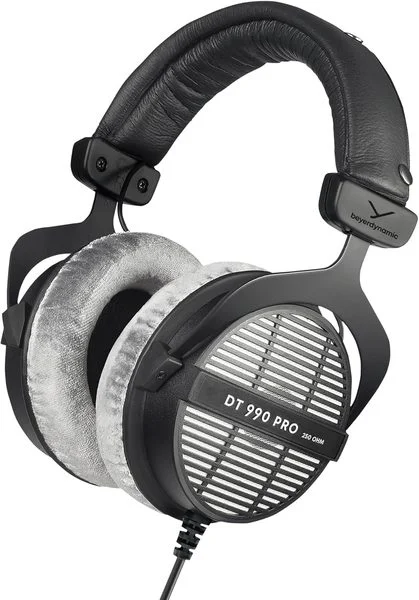
The DT 990 Pro shares the Beyerdynamic Pro family build: a spring-steel headband, dense plastic cups, thick velour pads and a fixed coiled cable with sturdy strain relief. It is built as studio equipment rather than a consumer headphone, and owner reports of units surviving many years of daily use are common. Pads, headband cushion and cable assembly are all available as spares.
The one fit issue owners raise again and again: the clamp is strong out of the box. The standard fix is to leave the headphone stretched over a stack of books or a box overnight; owners report the clamp eases noticeably afterwards.
Sound Character: V-Shaped and Proud of It
Published frequency-response measurements show a clear V: lifted bass, lifted treble and a midrange that sits slightly behind both. In practice owners describe it like this:
Bass: Extended and textured for an open-back. It doesn’t slam like a closed-back, but it is present and enjoyable.
Midrange: Present but not forward. Vocals sit further back than on a neutral headphone. Whether that reads as “natural” or “recessed” depends on your reference; next to an HD 600, most owners call it recessed.
Treble: The defining trait and the main source of disagreement. Measurements show a prominent peak in the high treble that adds air and detail and makes cymbals sparkle. It can also make some recordings harsh or sibilant over long sessions.
Gaming: Where It Shines
Positional audio matters in competitive games, and open-backs with a wide stage generally do it better than closed-backs. Owner consensus puts the DT 990 Pro among the best budget options here: footsteps are easy to place, gunfire direction is clear, and open-world environments feel spacious. The V-shaped tuning adds impact to explosions.
The catch is power. The 250Ω version can’t be driven properly from a controller or phone (see the math below). If you don’t want a desk amp, the low-impedance DT 990 Pro X is Beyerdynamic’s answer.
Treble Fatigue: Real, Manageable
Too many reviews wave this away. The DT 990 Pro’s treble peak is real. On compressed modern pop, some electronic music and metal with harsh cymbals, many owners report fatigue after an hour or so. Sensitivity varies a lot between listeners, but if bright headphones have bothered you before, expect this one to as well.
The fixes are simple. EQ works best: a few dB cut at the peak resolves most of it. Some genres (jazz, classical, acoustic, most game audio) rarely trigger it anyway. Don’t count on an amp to “warm it up”; a clean amp passes the peak straight through.
Amplifier Requirements
The 250Ω DT 990 Pro is rated at 96 dB/mW. For 110 dB peaks that means about 2.5 V RMS (25 mW, 10 mA), or about 5 V with 6 dB of headroom. Phones and laptops manage around 1 V, so the DT 990 Pro sounds quiet and thin from them. Any proper desktop amp clears the bar.
- FiiO K11 R2R (~$170): our default value pick, DAC and amp in one box
- Schiit Magni (Unity, $119): budget amp-only option, $199 with the DAC card
- JDS Labs Atom Amp 2 (~$129): clean, low-noise amp
Full tiers are in best amp for DT 990 Pro .
Value at ~$180
At roughly $170–200 (Oct 2026), the DT 990 Pro offers durable, serviceable build, a soundstage that usually costs more, and a tuning that works for gaming and entertainment. The Sennheiser HD 560S is the obvious alternative: more neutral, less bright, narrower stage. The DT 990 Pro wins for spatial performance and durability; the HD 560S wins for accuracy.
Final Verdict
The DT 990 Pro remains one of the best-value headphones for gaming and entertainment. If you’re not treble-sensitive, or you’re happy to use EQ, it also works as an all-rounder. If you want neutral sound for mixing or critical listening, look elsewhere: the Sennheiser HD 600 or DT 880 Pro suit that job better.
Looking for amp recommendations? See our complete Best Amplifier for Beyerdynamic DT 990 Pro — budget to high-end pairings with this headphone.
Related: DT 990 vs DT 880 · DT 770 vs DT 990