Research-based review, updated October 2026 · prices checked Oct 10, 2026. AmperHeads doesn’t bench-test or audition gear: this page combines published specs, our power math, third-party measurements and long-running owner reports. How we research and rate gear .
What Even Is a Planar Magnetic Headphone?
Before getting into the HiFiMAN HE400SE itself, it’s worth explaining why anyone would buy a headphone that needs a dedicated amplifier when the same money buys something that runs fine from a phone.
Planar magnetic headphones work differently from the dynamic drivers in most headphones and speakers. Instead of a coil attached to a cone that’s pushed in and out by a magnet, planar drivers embed a network of conductors directly into a large, thin diaphragm that sits between arrays of permanent magnets. When current flows through those conductors, the whole diaphragm is driven at once rather than from a single point.
Done well, that design tends to produce low distortion at normal and high volumes and bass that stays controlled and well defined. The HE400SE is HiFiMAN’s attempt to make the technology cheap. Whether it succeeds depends mostly on what you plug it into.
Design and Build Quality: The Trade-Off
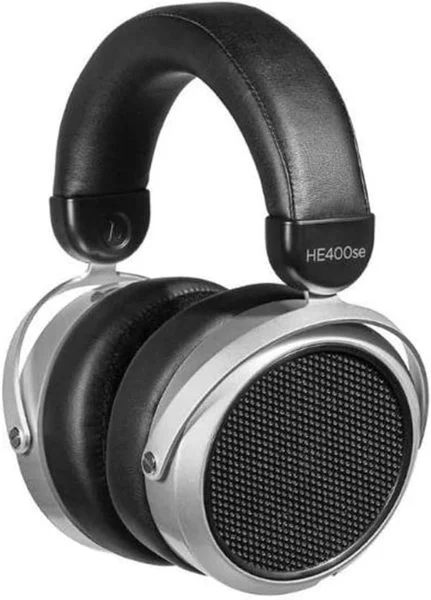
This is where the HE400SE asks you to compromise. Owner reports on r/headphones and Head-Fi are consistent: the plastic earcup assemblies feel hollow and toy-like next to Beyerdynamic’s studio headphones or even the Audio-Technica ATH-M50x, and the stock headband has a long-running reputation for hot spots on longer sessions. A headband strap mod is one of the most common fixes owners post.
The ear pads are soft, with an opening large enough for most ears. The stock cable is thin and tangles easily, and many owners replace it early.
On the positive side, the large open cups don’t trap heat, and clamping force is light. The headphone is heavy for its size, though, and that weight sits on the headband.
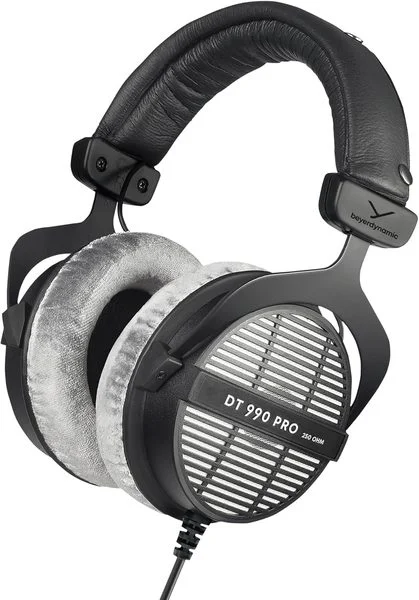
If build quality is your main concern, the Beyerdynamic DT 990 Pro or DT 770 Pro will feel far sturdier. People buy the HE400SE for what the driver does, not for the plastic.
Sound: What Measurements and Owners Agree On
Published frequency-response measurements show the HE400SE as roughly neutral, with bass that extends low without the roll-off typical of open dynamic headphones and a treble region that is generally smooth. Owners consistently single out the bass: they describe it as textured and well defined rather than simply loud, which matches the low distortion planars usually measure with.
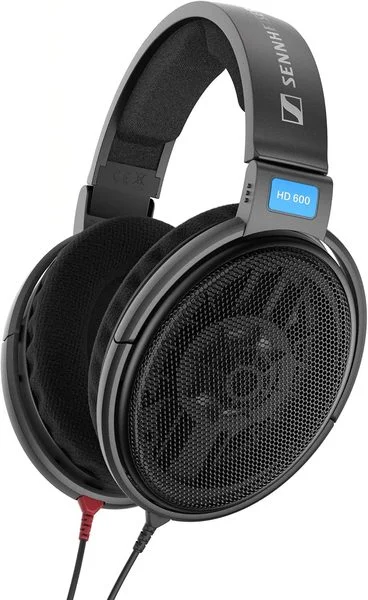
The overall balance sits between a bright Beyerdynamic like the DT 990 Pro and a warm Sennheiser like the HD 650. Owner reports describe vocals as clear and acoustic instruments as natural, with electronic music benefiting most from the controlled low end.
Imaging and stage get frequent praise in owner threads. As an open-back planar, it presents a wider stage than any closed-back in its price range.
The Amplifier Requirement: Critical, Not Optional
The 91 dB sensitivity figure deserves more attention than most reviews give it. Here’s the arithmetic, using HiFiMAN’s published 25Ω and 91 dB (taken as per milliwatt):
- 110 dB peaks need about 19 dB more than 1 mW, so roughly 80 mW.
- At 25Ω that is about 1.4 V RMS and close to 60 mA of current.
Many phones and basic USB-C dongles can’t deliver that cleanly into a low-impedance load, which is why owners describe the HE400SE as quiet, thin and compressed from portable sources. Any competent desktop amp clears the requirement with headroom.
My picks for it today:
- FiiO K11 R2R (~$170): a DAC and amp in one box with plenty of power for this load. This is our current default pick. See today's price for the FiiO K11 R2R on Amazon ↗
- Schiit Magni (Unity) ($119, $199 with the DAC card): the cheapest way to give it proper power if you already have a DAC.
- Topping DX5 II (~$299): if you expect to upgrade to a Sundara later and want one box that will handle both.
Discontinued amps you’ll still see recommended for it in older threads (the FiiO K5 Pro ESS, Topping DX3 Pro+ and Schiit Asgard 3) have current replacements in the list above.
Compared to Dynamic Alternatives
The Audio-Technica ATH-M50x and Beyerdynamic DT 770 Pro are the obvious alternatives at a similar budget. Both are closed-backs that isolate and run from a phone (the 80Ω DT 770 at least), which the HE400SE does not.
What the HE400SE offers instead is the planar character owners keep returning to: clean, controlled bass and a wide open presentation. The catch is that you’re buying an open-back that leaks sound and needs an amp. If you need isolation or portability, the closed dynamics are the better buy.
Who Should Not Buy It
- Anyone without a desktop amp budget. Plan for both purchases together.
- Anyone who needs isolation, or who listens around other people. It’s open-back and leaks.
- Anyone who wants a headphone to last a decade with rough handling. Beyerdynamic’s DT line is the safer bet.
Final Verdict
The HiFiMAN HE400SE is one of the best reasons to own a desktop amplifier at the budget end. The build is mediocre, the stock cable should be replaced, and the amp requirement is real. None of that changes what owners and published measurements agree on: given proper power, it delivers a smooth, natural balance with bass texture and imaging that are hard to find in a dynamic headphone at the same price.
Looking for amp recommendations? See our complete Best Amplifier for HiFiMAN HE400SE for budget to high-end pairings with this headphone.
Related: HE400SE vs Sundara · HiFiMAN Sundara review · Planar magnetic vs dynamic headphones · Best planar headphones under $300