Research-based review, updated October 2026 · prices checked Oct 10, 2026. AmperHeads doesn’t bench-test or audition gear: this page combines published specs, our power math, third-party measurements and long-running owner reports. How we research and rate gear .
See today's price for the Sony MDR-7506 on Amazon ↗Why the MDR-7506 Is Still Here After 35 Years
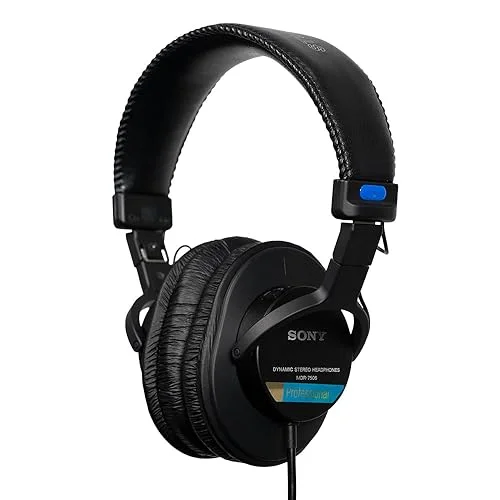
The Sony MDR-7506 was introduced in 1991. It has been a fixture in recording studios, broadcast control rooms, film sets and newsrooms ever since, and it’s one of the most common headphones you’ll see on audio crews in behind-the-scenes footage.
In 2026, it still sells for under $100.
That mix of ubiquity, longevity and price raises a fair question: is the MDR-7506 actually good, or is it inertia from an industry that standardised on it before better options existed? The evidence (published measurements plus decades of owner and engineer reports) says it is genuinely good for a specific purpose, and the right tool when that purpose matches yours.
Sound Signature: Analytical First
The MDR-7506 is designed for monitoring, not listening pleasure. That distinction matters.
Bass: Published frequency-response measurements show the low end tapering off in the sub-bass. Bass guitar and kick drum are audible, but owners report you hear them more than feel them. For dialogue monitoring that’s an advantage, since voices aren’t coloured by low-end weight. For bass-heavy music, it’s a limitation.
Midrange: Clean and fairly even through the vocal range. Without a warmth bump or scoop, voices come through as the microphone captured them, which is why it’s trusted for dialogue work.
Treble: The defining and most divisive feature. Measurements show a pronounced treble peak, which gives the MDR-7506 its crisp transients and makes sibilance obvious. It also explains the most common owner complaint: harshness on poorly recorded or heavily compressed material, and fatigue over long sessions. For short critical-listening sessions, that same peak makes it one of the most revealing headphones at its price.
Imaging: Owners describe placement as clear and precise within a narrow, closed-back stage. It’s not a wide-stage listening headphone.
Build and Comfort
The MDR-7506 prioritises folding and durability over premium looks. The frame is mostly plastic. Its long record in field use is the best evidence of its durability.
The ear cups swivel and fold, and the headphone collapses into a small bundle that fits the included soft pouch. For journalism, broadcast and on-set sound, that compact storage is a practical advantage.
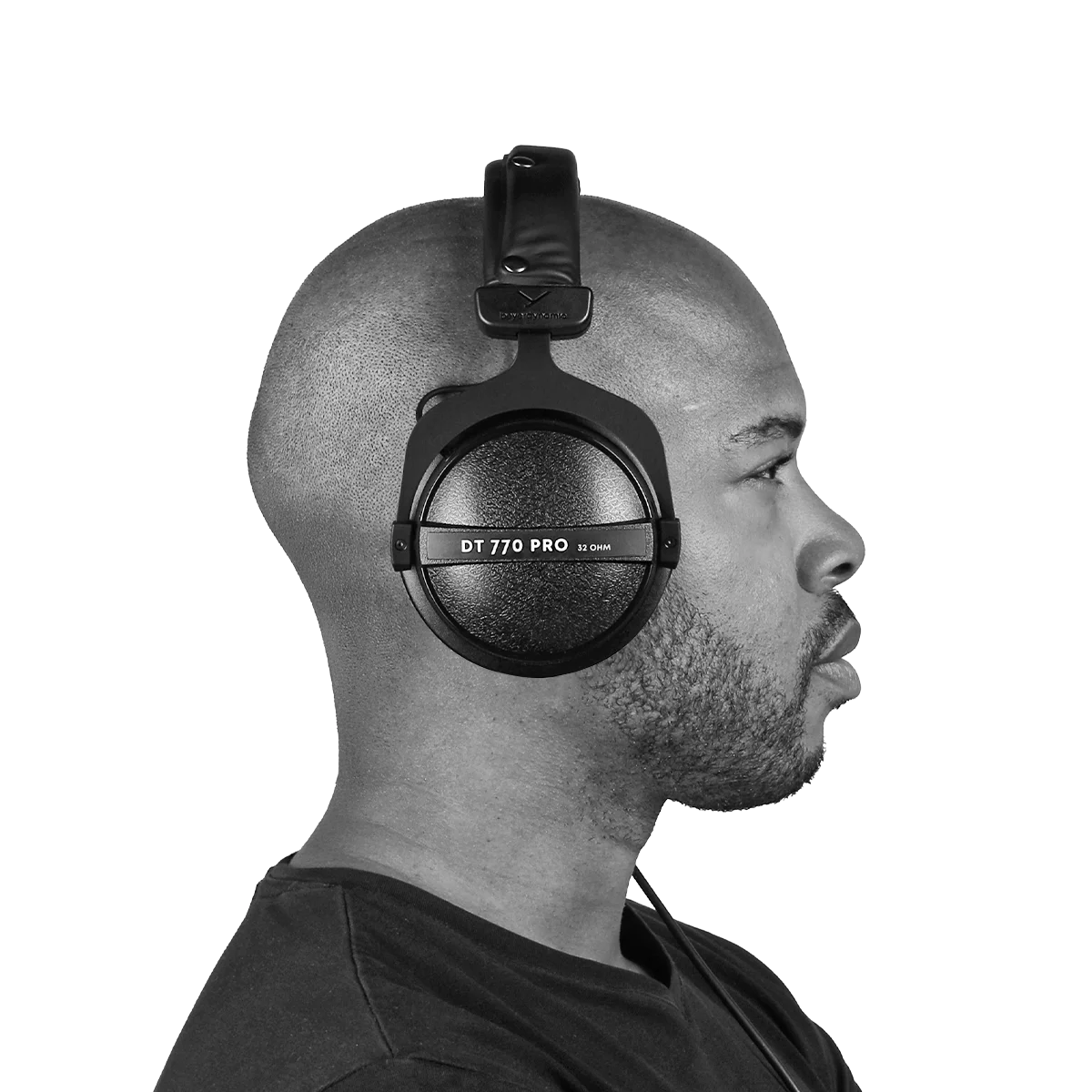
Comfort is functional rather than exceptional. The cups are smaller than those on the DT 770 Pro, so for many people they sit on or around the ear rather than fully over it. Owners generally find it fine for a couple of hours and less comfortable over long mixing sessions, where the DT 770 Pro or Sennheiser HD 280 Pro tend to be preferred.
The cable is coiled and non-detachable. That’s ideal at a mixing desk or on location, and less elegant for home listening, where you might want a straight cable or an easy replacement if it fails.
Power: It Runs From Anything
Using Sony’s published 63Ω and 106 dB/mW:
- 110 dB peaks need only 4 dB above 1 mW, so about 2.5 mW.
- At 63Ω that’s roughly 0.4 V RMS and about 6 mA.
Any phone with a jack, USB-C dongle, laptop, camera or mixer can do that. There’s no reason to buy an amp for it.
The Newer Sibling: Sony MDR-M1
In October 2024 Sony launched the MDR-M1 at $249.99, positioned as a modern closed-back studio monitor and the natural upgrade from the MDR-7506. Its most practical difference for most buyers is a detachable cable.
The MDR-7506 isn’t going anywhere: it’s still sold, still cheap and still the industry default. But if you’re buying a monitor for long sessions and can spend the extra, the MDR-M1 is worth looking at before you settle on the 1991 design.
Who Should Buy It
Buy the MDR-7506 if:
- You do broadcast, video, or audio production work and want an industry-standard monitor
- You need a headphone that works from any source without an amp: camera, phone, laptop, mixer
- You’re learning to mix and want a reference that exposes harshness and sibilance
- You want a durable headphone under $100 that lasts years
Don’t buy the MDR-7506 if:
- You mainly listen to music for pleasure. Owners frequently find the treble peak fatiguing and the bass lean.
- You want a detachable cable. Look at the ATH-M50x or the MDR-M1.
- You want a wide, open soundstage. This is a closed-back monitor.
- Your music is bass-heavy. The low-end taper will misrepresent it.
Compared to the Competition
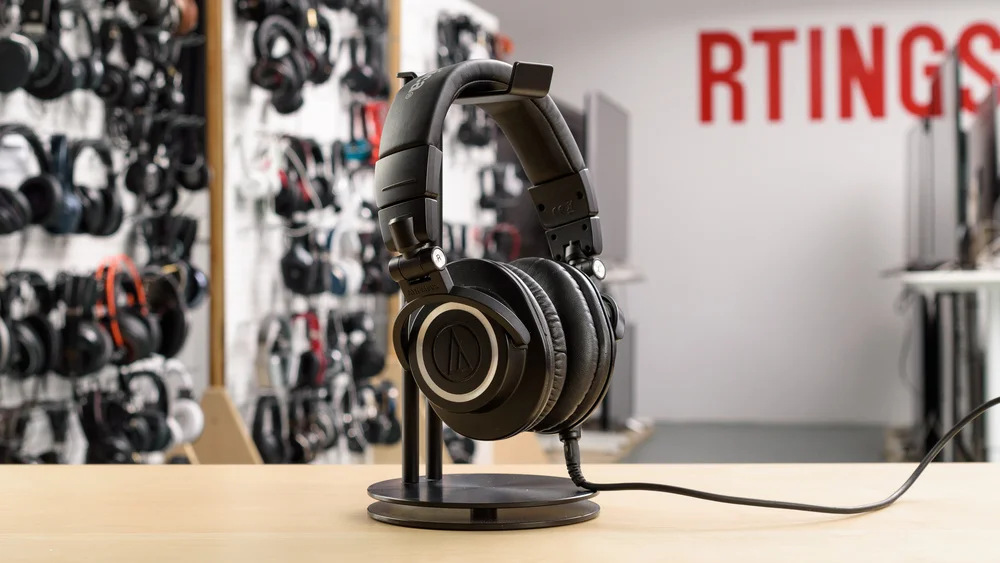
vs ATH-M50x (~$159): The M50x has a warmer tuning, detachable cables, and folds flat too. For music listening, owners generally prefer the M50x. For monitoring and broadcast work, the MDR-7506’s more revealing treble and lower price give it the edge. Full comparison: MDR-7506 vs ATH-M50x →
vs Beyerdynamic DT 770 Pro (~$160–180): The DT 770 Pro has more bass, better long-session comfort per owner reports, and a sturdier build. The MDR-7506 is more compact and field-ready. For tracking and broadcast, the MDR-7506. For home desk monitoring, the DT 770 Pro.
vs Sennheiser HD 280 Pro: Both are analytical closed-backs built for monitoring. Sennheiser rates the HD 280 Pro at up to 32 dB of passive attenuation, and it’s the more common choice where isolation matters, such as loud live environments. Owners describe the MDR-7506 as crisper in the treble. For noisy rooms and live events, the HD 280 Pro. For studio tracking and dialogue work, the MDR-7506.
Verdict
The Sony MDR-7506 has outlasted dozens of competitors because it does its job consistently and cheaply. It’s not the most comfortable, detailed or pleasurable headphone at its price, but it is one of the most revealing and most proven. If your work needs an analytical monitor that runs from any source, folds small and costs under $100, the MDR-7506 is still the answer in 2026. If you want the modern version and can spend $249.99, look at the MDR-M1.
Related: Sony MDR-7506 vs ATH-M50x · ATH-M50x review · Beyerdynamic DT 770 Pro review · Best closed-back headphones under $200 · Do I need a headphone amp?