Updated October 2026 · prices checked Oct 10, 2026. Amp specs are manufacturer ratings unless noted; the voltage math is shown so you can check it.
Current Picks
Best value if you need a DAC too. About 8 V balanced into 300Ω (+11 dB over 110 dB peaks), about 3.9 V from the 6.35mm jack (+5 dB).
Most single-ended headroom per dollar: about 11 V into 300Ω (+14 dB), under 0.1Ω output impedance. Add the DAC card or any USB DAC.
One box with balanced and single-ended headroom to spare (about 17 V balanced). The one to buy if a planar is in your future.
The OTL tube option. 300Ω Sennheisers are what it is designed around; expect a warmer, softer HD 650 rather than a louder one.
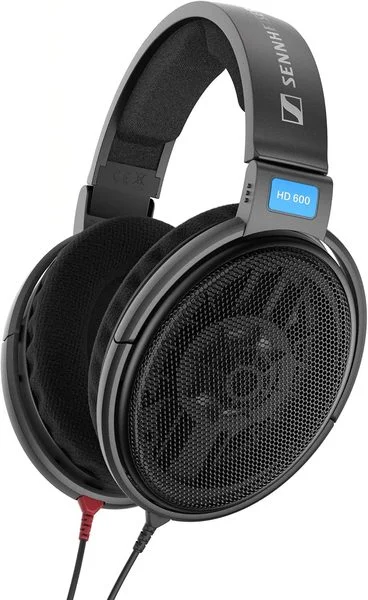
The short version: the HD 650 needs about 2.24 V and 17 mW for 110 dB peaks. That is very little power, but more voltage than phones and laptops deliver. Every desktop amp above clears it by 11 dB or more, so the choice between them comes down to whether you need a DAC, how much you want to spend, and whether you want the tube flavor.
The amps this page recommended until March (Magni Heresy, Asgard 3, Jotunheim 2) are no longer sold new. The replacement section maps each one to its current equivalent.
The Power Math: What 300Ω Actually Needs
Sennheiser rates the HD 650 at 103 dB SPL at 1 V and 300Ω. In per-milliwatt terms that is about 97.8 dB/mW, which many spec sheets round to 97 or 98. Here is the arithmetic used in every pairing guide on this site:
- Voltage for 110 dB peaks: 10^((110 − 103) / 20) = 2.24 V RMS
- Current: 2.24 / 300 = 7.5 mA
- Power: 2.24² / 300 = 16.7 mW
- With 6 dB of headroom on top (twice the voltage): 4.5 V, 15 mA, 67 mW
- Output impedance ceiling for a flat response (the Z/8 rule): 37.5Ω or less
If you use 97 dB/mW instead of 103 dB/V, the requirement becomes 2.45 V and 20 mW. The difference is under 1 dB and changes no verdict below.
Why 110 dB peaks? Well-recorded music has peaks 15 to 20 dB above its average level. Peaks of 110 dB put the average at about 90 to 95 dB, which is already loud. An amp that reaches 110 dB with room to spare will never compress the music at sane listening levels.
What breaks the HD 650 on weak sources is the voltage, not the power. Phone jacks, laptop outputs and USB-C dongles swing about 0.5 to 1 V. At 1 V the HD 650 peaks around 103 dB, so the average has to sit near 85 dB before transients start clipping. Turn it up from there and the source runs out of swing on every kick drum. That is where the “thin,” “veiled,” “no bass” impressions of an underpowered HD 650 come from. For the general theory, see what is headphone impedance and do I need a headphone amp .
Every Current Amp vs the HD 650
Requirement: 2.24 V for 110 dB peaks. Volts are derived from the published power at 300Ω (V = √(P × 300)). Headroom = 20 × log10(available ÷ 2.24 V). Anything above +6 dB is comfortable.
| Amp | Published output into 300Ω | ≈ Volts | Headroom | Output impedance | Verdict |
|---|---|---|---|---|---|
| Apple USB-C dongle | ~1 V (Audio Science Review measurement) | 1.0 V | −7 dB | <1Ω | Backup only; peaks ~103 dB |
| FiiO K11 R2R, 6.35mm | 50 mW (FiiO) | 3.9 V | +5 dB | <1Ω | Fine at normal-to-loud levels |
| FiiO K11 R2R, 4.4mm balanced | 220 mW (FiiO) | 8.1 V | +11 dB | <1.5Ω | Comfortable |
| JDS Labs Atom Amp 2 | 286 mW / 9.27 V (JDS) | 9.3 V | +12 dB | 0.7Ω | Comfortable |
| Schiit Magni (Unity) | 415 mW (Schiit) | 11.2 V | +14 dB | <0.1Ω | Comfortable |
| Schiit Asgard X, ¼-inch | 380 mW (Schiit) | 10.7 V | +14 dB | 0.7Ω | Comfortable |
| Schiit Midgard | 750 mW (Schiit) | 15.0 V | +17 dB | <0.1Ω | Comfortable |
| Topping DX5 II, 6.35mm | 250 mW (as listed in reviews) | 8.7 V | +12 dB | n/a | Comfortable |
| Topping DX5 II, balanced | 990 mW (Topping) | 17.2 V | +18 dB | n/a | Overkill |
| Schiit Jotunheim 3, ¼-inch | 330 mW (Schiit) | 9.9 V | +13 dB | <0.4Ω | Comfortable |
| Schiit Jotunheim 3, balanced | 1.2 W (Schiit) | 19.0 V | +19 dB | <0.8Ω | Overkill |
| Schiit Valhalla 3 (OTL tube) | 250 mW at 10% THD (Schiit) | 8.7 V | +12 dB | 25 / 40 / 60Ω | Works, colored by design |
How to read it: past about +6 dB, more headroom buys nothing you will hear on this headphone. The audible differences between the solid-state amps here are small. They come down to output impedance (all far below 37.5Ω), noise (inaudible on a 300Ω headphone with any of them), and where the volume knob sits. The Valhalla 3 is the one amp in the table built to sound different.
The Picks, Tier by Tier
FiiO K11 R2R (~$170): best value one-box
The K11 R2R puts a resistor-ladder DAC and a headphone amp in one chassis, with three gain settings. For the HD 650 the important detail is the split between its outputs. The 4.4mm balanced jack is rated at 220 mW into 300Ω, about 8.1 V and 11 dB of headroom. The 6.35mm jack is rated at 50 mW, about 3.9 V and 5 dB of headroom.
Five dB over 110 dB peaks is enough for most people at most volumes. If you listen loud, or want the margin, a 4.4mm balanced cable for the HD 650 (the cable connectors are the same two-pin type on the HD 600, HD 650 and HD 6XX) quadruples the available power. This is the pick if you are starting from a laptop and want one purchase. If you already own a good DAC, you would be paying for a second one: buy the Magni instead.
Schiit Magni (Unity) ($119): best budget amp
This is the current Magni, and the model that replaced the Magni Heresy and Heretic. Schiit rates it at 415 mW into 300Ω, which works out to about 11 V and 14 dB of headroom from an ordinary ¼-inch jack. Output impedance is under 0.1Ω and it has three gain settings, so you can keep the volume knob in a usable range. Schiit sells it for $119, or $199 with its DAC card installed.
If the HD 650 is your only headphone and you already have a DAC (or a motherboard with a clean optical output feeding one), this is all the amp it needs. The JDS Labs Atom Amp 2 ( See today's price for the JDS Labs Atom Amp 2 from JDS ↗ ) is the equivalent alternative at about $129: 9.27 V into 300Ω by JDS’s spec, 0.7Ω output impedance. Buy whichever is in stock.
Topping DX5 II (~$299): one-box with headroom to spare
The DX5 II is the step up for people who want one box and no compromises on outputs. Topping rates the balanced outputs (4.4mm and 4-pin XLR) at 990 mW into 300Ω, about 17 V. The single-ended 6.35mm jack is listed at 250 mW in reviews, about 8.7 V, so even the stock HD 650 cable gets 12 dB of headroom. It also adds headphone-correction EQ and a VU-meter display, which are conveniences rather than requirements.
The HD 650 alone does not need this much amp. Buy it if a power-hungry planar (a Sundara or similar) is likely to join the HD 650, because then you buy the amp once. See the best DAC/amp combo under $300 for the wider field.
Schiit Asgard X ($399) or Jotunheim 3 ($499): the high-end solid-state options
The Asgard X is Schiit’s replacement for the Asgard 3, and Schiit itself calls it a big departure from the old design. It has a Class A-biased discrete output stage with no feedback, a ¼-inch output rated at 380 mW into 300Ω (about 10.7 V), a 4.4mm output, two gain settings and a preamp out. On paper that is about the same voltage as the $119 Magni. What the extra money buys is the Class A design, the second output and the preamp section. Schiit’s Midgard ($219, 750 mW into 300Ω) sits between the two if you want a mid-price Schiit amp.
The Jotunheim 3 ( See today's price for the Schiit Jotunheim 3 from Schiit ↗ ) replaces the Jotunheim 2. It is a fully balanced amp: 1.2 W into 300Ω balanced (about 19 V), 330 mW single-ended, output impedance under 1Ω on both, and a slot for Schiit’s DAC card. It is the end-game solid-state answer for a desk that will also drive planars. For the HD 650 alone it is far past the point of audible returns.
Who should skip both: anyone buying them to “unlock” the HD 650. The HD 600 guide makes the same point for its sibling: a $119 amp already has more voltage than this headphone can use.
Schiit Valhalla 3 ($499): the OTL tube option
Output-transformerless (OTL) tube amps are a poor match for most headphones and a famously good one for 300Ω Sennheisers. The Valhalla 3 is the current mainstream example. Schiit rates it at 250 mW into 300Ω (about 8.7 V; the rating is at 10% THD, which is normal practice for tube amps) and lets you choose the output impedance: 25Ω on low gain, 40Ω on high gain, 60Ω with feedback switched off.
Two things change with the HD 650 on an OTL amp:
- Impedance interaction. The HD 650’s impedance is not flat. Published impedance plots show it rising to roughly 500Ω around the bass resonance. A high output impedance forms a voltage divider with the headphone, so slightly more voltage lands on the driver where its impedance is highest. Run the numbers and the bass lift is small: about 0.3 dB at 25Ω, 0.4 dB at 40Ω and 0.6 dB at 60Ω. A classic high-impedance OTL like the Bottlehead Crack (about 120Ω) produces roughly 1 dB.
- Distortion profile and damping. Tube amps add mostly low-order harmonic distortion and give the driver less electrical damping. Owners describe the result as denser, rounder and softer in the treble. Since the frequency-response change is under 1 dB, this second effect is most of what people hear.
That is why the Valhalla 3 is a character choice and not a power upgrade. Low gain at 25Ω output impedance stays inside the Z/8 rule; the 60Ω setting deliberately breaks it for more of the effect. The Bottlehead Crack (a DIY kit) and the Darkvoice 336SE are the other long-running OTL options owners recommend for this headphone; the 336SE has a known hum issue that owners fix with tube swaps. Background on the trade-offs: tube amp vs solid state .
Skip OTL tubes if you also own planars or low-impedance headphones (an OTL amp drops much of its voltage across its own output impedance into a 32Ω load), if you need one amp for everything, or if you have not yet heard the HD 650 on a neutral amp.
The HD 6XX: Same Headphone, Same Amps
The HD 6XX was the HD 650 sold through Drop in a midnight-blue finish at a lower price. It has the same 300Ω rating and the same driver family, so every amp, number and verdict on this page applies to the HD 6XX unchanged. If you searched for “best amp for HD 6XX,” the answer is the same table.
What has changed is availability. Drop took its last orders on March 25, 2026 and closed on March 31. The remaining HD 6XX stock is sold only by Sennheiser US, listed at $219.95 when we checked on October 10, 2026, and it is unlikely to be restocked once it sells out.
See today's price for the Sennheiser HD 6XX from Sennheiser ↗If the HD 6XX is gone by the time you read this, the HD 650 itself is still in production at about $380 on sale ($579.95 list) at Sennheiser US. The cheaper 300Ω alternative is the HD 600 , which needs the same amps. The 150Ω HD 550 and the 120Ω HD 560S are easier to drive and cost about $200 on sale.
Two sensible complete setups at today’s prices:
| Setup | Approx. total | Notes |
|---|---|---|
| HD 6XX + Schiit Magni (Unity) with DAC card | ~$420 | 14 dB of headroom single-ended, one box |
| HD 6XX + FiiO K11 R2R | ~$390 | Add a 4.4mm cable for the full 11 dB |
| HD 650 + Topping DX5 II | ~$680 | Balanced and single-ended headroom to spare |
The Old Picks Are Discontinued: Here’s What Replaced Them
Earlier versions of this page, and most HD 650 threads from 2019 to 2024, recommend amps you can no longer buy new. If you landed here searching for one of them:
| Old recommendation | Status (Oct 2026) | Buy instead |
|---|---|---|
| Schiit Magni Heresy / Heretic | Retired; Schiit’s site says it “killed Magni Heretic” | Schiit Magni (Unity) , $119 |
| Schiit Asgard 3 | No longer in Schiit’s lineup | Schiit Asgard X ($399), or Midgard ($219) |
| Schiit Jotunheim 2 | Replaced in Schiit’s lineup | Schiit Jotunheim 3 ($499) |
| Schiit Modi Multibit (DAC) | Discontinued | Schiit Modi 5 ($149) or the FiiO K11 R2R |
| Drop + THX AAA 789 | No retail channel since Drop closed | Topping DX5 II or Jotunheim 3 |
| JDS Labs Atom Amp+ | Superseded | JDS Labs Atom Amp 2 (~$129) |
| FiiO K5 Pro ESS | Discontinued | FiiO K11 R2R (~$170) |
If you already own one of these, keep it. The Magni Heresy, Asgard 3, Jotunheim 2 and THX 789 all clear the HD 650’s 2.24 V requirement by more than 10 dB. Nothing about the HD 650 makes them obsolete; they just are not on sale anymore. Our older reviews, like the Magni Heresy review , remain useful if you are shopping used.
What Owners Say (as of October 2026)
This is a summary of long-running owner discussion on r/headphones, Head-Fi and the Audio Science Review forum, not a test we ran:
- The first amp is the big jump. Going from a phone or laptop to any competent desktop amp is the change nearly everyone reports hearing: firmer bass, less congestion at volume. This matches the voltage math above.
- Solid-state to solid-state is subtle. Reports of large differences between well-designed solid-state amps at matched volume are rare, and the ones that exist usually involve level differences or a weak single-ended output.
- OTL tubes are the polarizing upgrade. The Valhalla line, the Bottlehead Crack and the Darkvoice 336SE are the most cited tube matches for the HD 650 and HD 6XX. Owners who keep them describe a richer, more relaxed sound; owners who sell them describe it as slower and softer.
- The “veil” debate never ends. Some owners blame underpowered sources for the HD 650’s reputation as dark or veiled. Others say it is simply the tuning. Both can be true: weak sources make it worse, and a strong amp does not turn it into a bright headphone.
Who Should Not Buy What
- Skip the dongle as a main source. Seven dB short of 110 dB peaks is the definition of underpowered for this headphone.
- Skip the K11 R2R if you already own a DAC. Get the Magni (Unity) or Atom Amp 2 and keep the money.
- Skip the DX5 II, Asgard X and Jotunheim 3 if the HD 650 is your only headphone and you want maximum value. The $119 Magni has the voltage. Spend more for features, outputs or a future planar.
- Skip the Valhalla 3 if you own planars or IEMs, or want one amp for every headphone.
- Skip balanced cables bought “for the HD 650.” They help only on boxes with a weak single-ended jack, like the K11 R2R. On a Magni or Asgard X they change nothing audible. See balanced vs single-ended .
HD 650 vs HD 600: Does the Amp Choice Change?
Not for power. Both are 300Ω and need roughly the same voltage, so the table above works for both. The difference is in the character advice. The HD 650 is warmer and thicker, and it is the one most owners pair with tubes. The HD 600 is drier and more neutral, so a neutral solid-state amp is the usual first choice for it. The HD 600 vs HD 650 comparison covers the headphones themselves, and the HD 600 vs HD 660S2 page covers the newer, lower-impedance model.
Final Recommendation
If you need a DAC and an amp, buy the FiiO K11 R2R and plan on a 4.4mm cable if you listen loud. If you have a DAC, buy the Schiit Magni (Unity). If you want one box that will also run a planar later, buy the Topping DX5 II. If you want to hear what the HD 650’s tube reputation is about, the Valhalla 3 is the current way to do it, ideally after you know how the headphone sounds on a neutral amp.
Related: Sennheiser HD 650 review · Best amp for HD 600 · Best amp for HD 58X · Best amp for HD 560S · How we research