Published October 2026 · prices checked Oct 10, 2026. Research-based comparison: specs, voltage math, published reviews and owner reports. AmperHeads doesn’t bench-test or audition gear. How we research .
The Short Answer
The DT 770 Pro X is the better default for most new buyers. It costs about $20–40 more than the classic, gets loud from a phone or a PS5 controller without an amp, and has a detachable cable, which fixes the classic’s one real long-term weakness. Buy the DT 770 Pro if you want to save that money, or the 250Ω version if the headphone will live on a studio headphone amp or mixer with a high output impedance.
48Ω, about 0.8 V for 110 dB peaks, and a detachable mini-XLR cable. Plays loud from phones, laptops and controllers with no amp.
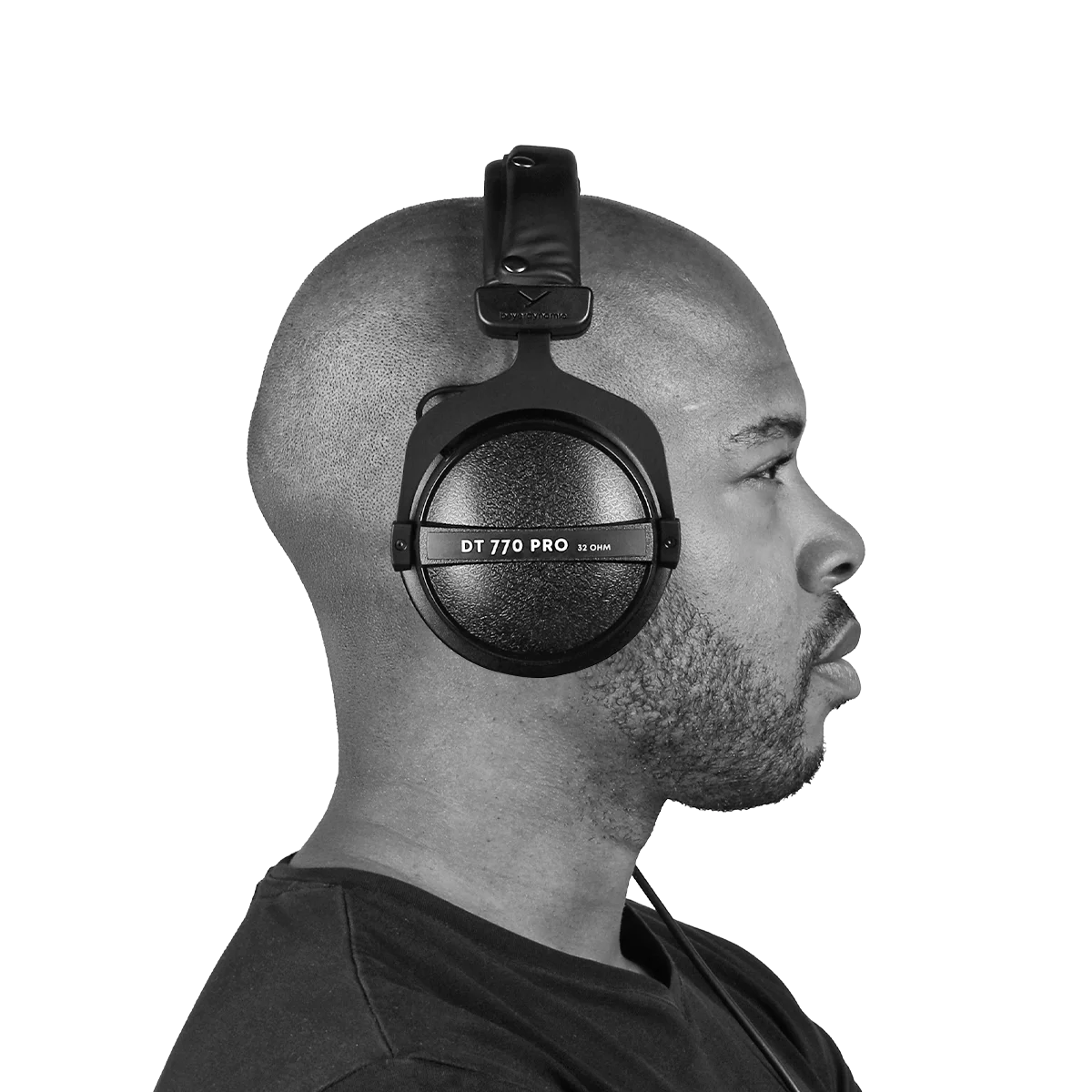
The 1985 classic. The 80Ω is the budget pick for most sources; the 250Ω is the one for headphone amps and consoles.
People who search “DT 770 Pro 80 ohm vs DT 770 Pro X” are usually already sold on the DT 770 and trying to pick the version. If you’ve settled on the classic and only need the impedance answer, the DT 770 Pro 80Ω vs 250Ω comparison has the full source-by-source table. This page covers the newer model.
What the DT 770 Pro X Actually Is
Beyerdynamic launched the DT 770 Pro X at NAMM in January 2024 as a time-limited Limited Edition for the company’s 100th anniversary (Beyerdynamic was founded in 1924), at a recommended €199. The press release describes it as keeping “the proven sound signature of the DT 770 PRO” while adding three things: the STELLAR.45 driver, a pluggable cable, and a fontanel recess in the headband. In November 2025 Sound On Sound reported that it had joined Beyerdynamic’s permanent studio range as plain DT 770 Pro X, at $199.99.
One detail matters if you’re shopping used or from older stock. Beyerdynamic’s support FAQ says the current core Pro X has slightly reduced bass and treble compared with the Limited Edition, for a more balanced response. Same driver and impedance; slightly calmer tuning. Reviews from 2024 describe the Limited Edition.
Specs Side by Side
| DT 770 Pro | DT 770 Pro X | |
|---|---|---|
| Impedance | 32Ω, 80Ω or 250Ω | 48Ω (one version) |
| Driver | Classic DT 770 driver | STELLAR.45 |
| Sensitivity | 96 dB/mW (≈107 dB/V on the 80Ω) | 98 dB/mW, 112 dB/V |
| Frequency response (rated) | 5–35,000 Hz | 5–40,000 Hz |
| Cable | Fixed, single-sided (coiled on 80Ω/250Ω, shorter straight cable on 32Ω) | Detachable 3 m straight, locking 3-pin mini-XLR |
| Headband pressure (rated) | approx. 3.5–5.5 N | 5.5 N |
| Weight (Beyerdynamic) | 375 g including cable | 305 g without cable |
| Pads | Velour, replaceable | Velour, replaceable |
| Price (Oct 2026) | ~$160–180 | ~$200 |
The rated frequency-response extension (35 vs 40 kHz) is far above audibility and tells you nothing useful. The numbers that matter are sensitivity, impedance and the cable.
Drive Requirements: The Voltage Math
Beyerdynamic rates the Pro X at 112 dB SPL at 1 V (98 dB/mW). The classic DT 770 Pro is rated at 96 dB/mW in all three versions, which converts to about 111, 107 and 102 dB/V for the 32Ω, 80Ω and 250Ω.
Method. Voltage for a target SPL: V = 10^((SPL − S_dBV)/20). The target is 110 dB peaks (loud, dynamic music averages roughly 90–95 dB at that setting), plus 6 dB of headroom, which doubles the voltage. The output-impedance limit uses the common Z/8 rule for a flat bass response.
| Version | Sensitivity (dB/V) | Voltage for 110 dB peaks | Current | Power | With 6 dB headroom | Max source output impedance (Z/8) |
|---|---|---|---|---|---|---|
| DT 770 Pro X (48Ω) | 112 | ~0.8 V | ~16 mA | ~13 mW | ~1.6 V | ≤6Ω |
| DT 770 Pro 32Ω | ~111 | ~0.9 V | ~28 mA | ~25 mW | ~1.8 V | ≤4Ω |
| DT 770 Pro 80Ω | ~107 | ~1.4 V | ~18 mA | ~25 mW | ~2.8 V | ≤10Ω |
| DT 770 Pro 250Ω | ~102 | ~2.5 V | ~10 mA | ~25 mW | ~5.0 V | ≤31Ω |
The Pro X needs slightly less voltage than even the 32Ω classic, and about half the power and much less current. That makes it the easiest DT 770 to drive from a weak, current-limited dongle. The trade-off sits in the last column: at 48Ω it wants a cleaner, lower-impedance output than the 80Ω or 250Ω.
Real sources, calculated
Headroom = 20·log10(available ÷ required) against 110 dB peaks. Positive means you can reach that level; negative means you can’t. Source voltages are typical or manufacturer-derived figures, the same ones used in our 80Ω vs 250Ω table. These are calculations, not measurements.
| Source | Approx. output | Pro X (48Ω) | Pro 80Ω | Pro 250Ω |
|---|---|---|---|---|
| Phone jack / USB-C dongle | ~1 V or less | ≈ +2 dB | ≈ −3 dB | ≈ −8 dB |
| PS5 DualSense controller jack | ~1 V or less | ≈ +2 dB | ≈ −3 dB | ≈ −8 dB |
| Laptop / motherboard 3.5 mm | ~1 V, output impedance varies widely | ≈ +2 dB (if Zout ≤6Ω) | ≈ −3 dB | ≈ −8 dB |
| Focusrite Scarlett 2i2 4th gen | ~1.7 V, <1Ω | ≈ +6.5 dB | ≈ +1.5 dB | ≈ −3.5 dB |
| FiiO K11 R2R (6.35 mm) | ~4 V | ≈ +14 dB | ≈ +9 dB | ≈ +4 dB |
| Schiit Magni (Unity) | ~8.9 V into 32Ω | ≈ +21 dB | ≈ +16 dB | ≈ +13 dB |
Put another way, from the same 1 V jack the Pro X reaches about 112 dB peaks, the 80Ω about 107 dB and the 250Ω about 102 dB. Five decibels is a clearly audible gap, and it’s the main practical reason the Pro X exists. On a desktop amp the gap disappears: every version has more headroom than anyone should use.
The Z/8 column matters for laptops and old mixers. A motherboard jack with 10–20Ω output impedance will shift the Pro X’s bass more than it shifts the 250Ω’s. Most current phones, dongles and interfaces are well under 6Ω, so this mainly concerns older gear and headphone distribution amps.
If you do want an amp for either, the DT 770 Pro amp pairing guide has current picks with the same math.
Cable and Serviceability
This is the difference owners care about most over the years. The classic DT 770 Pro’s cable is fixed to the left cup. Every DT 770 is serviceable (Beyerdynamic sells pads, headbands and parts), but replacing a damaged fixed cable means opening the cup and soldering, or paying a repair service. Long-term owner reviews single out the cable as the classic’s main weak point.
The Pro X uses a locking 3-pin mini-XLR socket. A damaged cable becomes a replacement part you plug in, and you can buy a shorter cable for portable use, since only the 3 m one comes in the box. Gearnews’ review notes one downside: the locking connector holds firmly, so a hard yank puts the strain on the socket instead of letting the plug pop out.
Two limits of the 3-pin connector: it isn’t balanced-capable without modification, because left and right share a ground; and it has no microphone conductor, so it doesn’t turn the Pro X into a headset.
Pads, Clamp and Comfort
Both use velour pads in the same closed-back cup design, and both have replaceable pads and headbands. On paper the Pro X’s 5.5 N headband pressure sits at the firm end of the classic’s 3.5–5.5 N range. The Pro X headband adds a fontanel cut-out, a recess that takes pressure off the top of the head. Gearnews calls the Pro X “extremely comfortable” and fine with glasses. The classic’s velour comfort is one of the most consistent points in its 40-year owner record, so neither is a comfort risk for most heads. Some owners with large ears find the classic’s cups shallow; Beyerdynamic doesn’t list a change to cup depth on the Pro X.
Tuning: What’s Verifiable
Be cautious with sound claims here, because the classic has decades of measurements and the Pro X has far fewer.
- Beyerdynamic’s description: the Pro X has “the familiar sound tuning of the DT 770 PRO with a boost in the bass and treble frequencies”, lower total harmonic distortion, and higher efficiency. In other words, the same V-shaped family, with a new driver.
- The Limited Edition vs current model: per Beyerdynamic’s support FAQ, the current Pro X has slightly less bass and treble than the 2024 Limited Edition.
- Measurements: RTINGS has a full review of the classic DT 770 Pro. When we checked (October 2026) RTINGS had not published a Pro X review, and we found no independent Pro X measurement we could cite with confidence. We’ll update this section when one appears.
- Reviews and owners: Gearnews’ 2025 review describes “slightly elevated bass and treble ranges”, a sweet spot between neutral and pleasant. Owner comparisons posted on r/HeadphoneAdvice since 2024 tend to describe the Pro X’s treble peak as a little rounded off and the overall sound a touch warmer than the classic’s. That is early owner feedback, not consensus.
The fair summary: expect a DT 770 with the same character and possibly a slightly smoother top end. If the classic’s treble peak is the reason you’re hesitating, the Pro X is the version more likely to suit you. If you need a neutral reference for mixing, neither is that headphone.
Use Cases
| Use | Better pick | Why |
|---|---|---|
| Studio tracking on a good interface | Either; Pro X for cable swaps | Same isolation design; a plug-in cable is easy to replace mid-session |
| Tracking on a headphone distribution amp or older mixer | DT 770 Pro 250Ω | Tolerates high output impedance (≤31Ω vs ≤6Ω) |
| PS5 / Xbox controller | Pro X | ~1 V jack: Pro X keeps ~2 dB in reserve, 80Ω falls ~3 dB short |
| Gaming PC, motherboard audio | Pro X (80Ω if the jack’s output impedance is high) | More level from ~1 V; check the jack if bass sounds bloated |
| Phone / commuting | Pro X | Loudest from a phone, and you can fit a shorter cable |
| Desk with a desktop amp | Either; 250Ω if you want the classic | Headroom stops mattering; pick on cable and price |
| Tight budget | DT 770 Pro 80Ω | ~$160–180 vs ~$200 for a very similar headphone |
For console-specific setups see best wired headphones for PS5 , and for the wider closed-back field at this price, best closed-back headphones under $200 .
Which Should You Buy?
Buy the DT 770 Pro X if:
- You don’t own a headphone amp and don’t plan to buy one
- Your main sources are a phone, laptop, PS5 controller or a bus-powered interface
- You want a cable you can replace or swap for a shorter one
- The classic’s treble reputation worries you and you’d like the slightly calmer current tuning
Buy the DT 770 Pro if:
- You want to save $20–40 and an 80Ω jack-of-all-trades suits you
- Your rig is a headphone distribution amp, a mixing console or older gear with high output impedance (get the 250Ω)
- You want the version with forty years of measurements and owner history behind it
Neither, if: you mix and need a neutral reference, or you don’t need isolation. An open-back such as the DT 900 Pro X uses the same 48Ω STELLAR.45 platform and detachable mini-XLR cable, with an open back that trades isolation for a more spacious presentation.
DT 770 Pro X (~$200, Oct 2026): See today's price for the Beyerdynamic DT 770 Pro X on Amazon ↗
DT 770 Pro (~$160–180, Oct 2026): See today's price for the Beyerdynamic DT 770 Pro on Amazon ↗
Same 48Ω STELLAR.45 driver family and detachable cable, open-back for desk listening where isolation doesn't matter.
For everything about the classic on its own, read the full DT 770 Pro review .
Sources
- Beyerdynamic, DT 770 PRO X product page (48Ω, STELLAR.45, 5–40,000 Hz, 305 g, 5.5 N) and DT 770 PRO product page (32/80/250Ω, 96 dB, approx. 3.5–5.5 N, 375 g with cable)
- Beyerdynamic press release, DT 770 PRO X Limited Edition at NAMM (100th anniversary, 98 dB/mW and 112 dB/V, €199, 3 m mini-XLR cable)
- Beyerdynamic blog, Comparison of our closed studio headphones (tuning, THD, detachable straight cable)
- Beyerdynamic support, How does the DT 770 PRO X differ from the DT 770 PRO X Limited Edition
- Sound On Sound, Beyerdynamic release DT 770 Pro X (permanent range, $199.99, Nov 2025)
- Gearnews, Beyerdynamic DT 770 Pro X review (May 2025)
- RTINGS, Beyerdynamic DT 770 PRO review