The Fundamental Difference
The DT 770 and DT 990 Pro are both legendary Beyerdynamic headphones — but they are designed for fundamentally different situations.
DT 770 Pro — Closed-back. Blocks ambient noise. Keeps your sound from leaking out. Studio monitoring, recording, commuting, shared spaces.
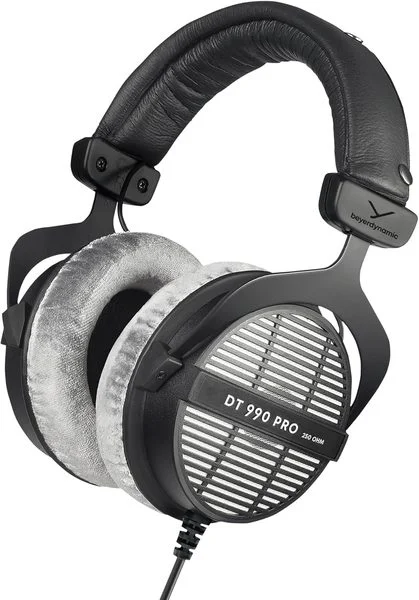
DT 990 Pro — Open-back. Wide, airy soundstage. Sound leaks in and out. Home listening, gaming, critical audio work in a quiet room.
The choice between them is primarily about your listening environment, not just sound quality preference.
Updated October 2026 · prices checked Oct 10, 2026.
Closed-back for shared rooms, recording and commuting, with the deeper bass of the two.
Open-back with the wider stage gamers and classical listeners want. Bright treble, so not for treble-sensitive ears.
Specs Comparison
| Beyerdynamic DT 770 Pro | Beyerdynamic DT 990 Pro | |
|---|---|---|
| Design | Closed-back | Open-back |
| Impedance options | 32Ω / 80Ω / 250Ω | 80Ω / 250Ω |
| Sensitivity | 96 dB/mW (250Ω) | 96 dB/mW (250Ω) |
| Frequency response | 5–35,000 Hz | 5–35,000 Hz |
| Weight | 270g | 250g |
| Cable | Coiled, non-removable | Coiled, non-removable |
| Street price (Oct 2026) | ~$160–180 | ~$170–200 |
Sound Character
The descriptions below summarise published frequency-response measurements and the long-standing owner consensus on Head-Fi and r/headphones, not personal listening notes.
DT 770 Pro — V-Shaped Closed-Back
The DT 770 Pro has a pronounced V-shaped sound signature: elevated bass, slightly recessed midrange, and lifted treble. The bass is punchy and extended, and owners rank it among the deepest-reaching closed-backs at the price. The famous “Beyer treble peak” is present but less aggressive than in the DT 990.
The closed-back design naturally limits soundstage width. The DT 770 Pro sounds intimate rather than spacious — instruments are placed close together rather than spread across a wide stage. This is inherent to the design, not a flaw.
For music: excellent with electronic, hip-hop, and pop where bass impact matters. Acceptable for rock and acoustic. The midrange recession can make vocals sound slightly distant.
DT 990 Pro — Bright Open-Back with Wide Soundstage
The DT 990 Pro is brighter and more analytical than the DT 770. The bass is present but more controlled. The midrange is more transparent. The treble is where the DT 990 makes its reputation — and earns its controversy.
The Beyerdynamic “treble spike” — a prominent rise around 8–10kHz — is more pronounced in the DT 990 than in any of their other models. This gives the DT 990 exceptional micro-detail retrieval and sparkle on recordings with lots of high-frequency content (acoustic guitar, cymbals, violin). It also causes sibilance issues (“sss” sounds becoming harsh) on poorly mastered recordings at higher volumes.
The DT 990 Pro’s open-back design creates a genuinely wide soundstage. Instruments spread naturally across the left-right field, and depth cues in well-recorded music are clearly resolved. This is why it shows up on so many value gaming-headphone lists for competitive play.
Impedance Version: Which to Buy?
For desktop use with a DAC/amp: Get the 250Ω version of either. Owners describe the 250Ω as slightly tighter in the bass, and it is far more tolerant of high-output-impedance sources. It needs a proper amplifier to reach full volume.
For phone or laptop use without an amp: Get the 80Ω version. It’s more efficient and reaches adequate volume from modern mobile devices, though owners describe its bass as slightly fuller and looser than the 250Ω on an amplifier. For the full breakdown of that decision, see our DT 770 Pro 80Ω vs 250Ω comparison .
32Ω DT 770 only: The 32Ω version is designed for phones. It is the least tolerant of high output impedance but gets loud without any amplification.
Newer sibling: Beyerdynamic now also sells the DT 770 Pro X (~$200), a 48Ω closed-back aimed at interfaces and mobile sources, if you want to skip the impedance question entirely.
Which Amplifier Do You Need?
Both 250Ω versions need about 2.5 V for 110 dB peaks (96 dB/mW at 250Ω works out to roughly 102 dB/V), which is more than a phone or laptop jack delivers. Current options:
One-box DAC/amp. Its single-ended jack swings about 4 V, enough for 110 dB peaks on either 250Ω model with a few dB to spare.
If you already have a DAC: 415 mW into 300Ω (about 11 V), so either 250Ω Beyerdynamic has 13 dB of headroom. $199 with Schiit's DAC card.
JDS Labs' current amp, about 2.6 W into 32Ω and sold direct. Plenty for both headphones.
The amp pairing guides go further: best amp for the DT 770 Pro and best amp for the DT 990 Pro .
Use Case Summary
| Use Case | Best Pick |
|---|---|
| Home listening (quiet room) | DT 990 Pro |
| Gaming | DT 990 Pro |
| Recording / tracking | DT 770 Pro |
| Shared office / open plan | DT 770 Pro |
| Commuting / travel | DT 770 Pro |
| Electronic / hip-hop | DT 770 Pro |
| Classical / jazz detail | DT 990 Pro |
| Critical monitoring | DT 990 Pro (less bass boost) |
| Sensitive to treble | DT 770 Pro |
Which Should You Buy?
DT 770 Pro if: You need isolation, share a space, or record audio. The closed-back design is the deciding factor. If you want a closed-back with deep, physical bass at this price, the DT 770 is the safe pick.
DT 990 Pro if: You listen in a quiet room and want a more spacious, detailed sound. The wide soundstage makes it outstanding for gaming, classical, and acoustic music. Be prepared for the treble — it’s bright and not for sensitive listeners.
If treble brightness concerns you but you want open-back, look at the Sennheiser HD 600 instead. If you need closed-back with less bass emphasis, the Audio-Technica ATH-M50x is worth considering.
Who Should Not Buy Either
- Treble-sensitive listeners: both have Beyerdynamic’s upper-treble lift, the DT 990 more so.
- Phone-only listeners who want the 250Ω: buy the 80Ω version or budget for an amp.
DT 770 Pro (~$160–180): See today's price for the Beyerdynamic DT 770 Pro on Amazon ↗
DT 990 Pro (~$170–200): See today's price for the Beyerdynamic DT 990 Pro on Amazon ↗