Overview
The DT 990 Pro and DT 880 Pro are often discussed together as Beyerdynamic’s two open-back offerings in the $150–$200 range. They share the same chassis, similar build quality, and nearly identical amp requirements. The sound, however, is quite different.
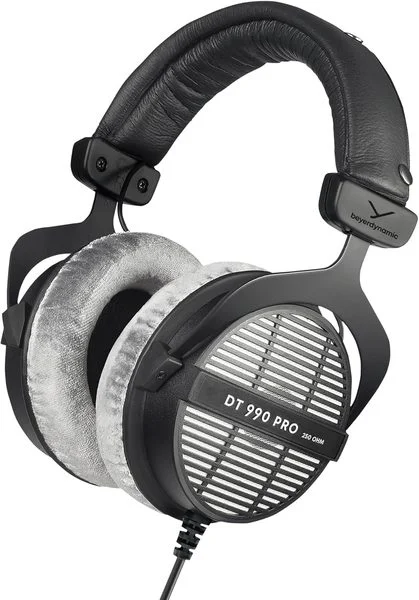
DT 990 Pro — Bright, V-shaped, exciting. More bass, more treble, a wide and energetic presentation. Beloved by gamers and casual audiophiles.
DT 880 Pro — Semi-open, balanced, reference-oriented. Flatter response, more controlled treble, better suited to critical listening and mixing.
Updated October 2026 · prices checked Oct 10, 2026.
The flatter, calmer Beyerdynamic. Some retailers have listed DT 880 Pro variants as out of production, so check availability before you set your heart on it.
Wider stage, more bass, more sparkle, and usually the cheaper of the two (~$170–200 in Oct 2026).
Specs Comparison
| Beyerdynamic DT 880 Pro | Beyerdynamic DT 990 Pro | |
|---|---|---|
| Design | Semi-open back | Open-back |
| Impedance | 250Ω | 250Ω |
| Sensitivity | 96 dB/mW | 96 dB/mW |
| Frequency response | 5–35,000 Hz | 5–35,000 Hz |
| Weight | 295g | 250g |
| Street price (Oct 2026) | Check current price | ~$170–200 |
The semi-open design of the DT 880 sits between closed-back isolation and open-back soundstage — it leaks some sound and admits some outside noise, but less than a fully open design like the DT 990.
Sound Differences
These differences come from published frequency-response measurements and years of owner reports on Head-Fi and r/headphones, not from personal listening.
Treble
This is the biggest differentiator. Both headphones have Beyerdynamic’s characteristic treble peak, but it’s significantly more prominent in the DT 990 Pro. The DT 990 can cause listening fatigue and sibilance on bright recordings at higher volumes. The DT 880 Pro’s treble is present and detailed but more controlled — it’s described as “analytical” rather than “harsh.”
If you’re sensitive to treble brightness, the DT 880 is notably more forgiving than the DT 990.
Bass
The DT 990 Pro has more sub-bass and mid-bass emphasis. It sounds fuller, more impactful, more engaging on electronic and rock. The DT 880 Pro’s bass is tighter and more neutral — it doesn’t boom or punch, it informs. For monitoring whether a bass line sits right in a mix, the DT 880’s honesty is valuable. For enjoying that bass line, the DT 990 is more fun.
Midrange
Both headphones have a slight upper-bass/lower-midrange scoop — the V-shaped Beyerdynamic character. The DT 880 recovers more quickly in the midrange, making vocals and instruments sound more natural. The DT 990’s scoop is deeper, giving it a more “hi-fi” presentation where bass and treble dominate over mids.
Soundstage
The DT 990’s fully open back gives it a slightly wider and more spacious soundstage than the DT 880’s semi-open design. The DT 880’s imaging is more precise. For gaming, the DT 990 wins on sheer width. For critical listening, the DT 880’s precision is more useful.
Who Should Buy Which
DT 880 Pro if:
- You mix, produce, or need a reference monitoring tool
- You’re sensitive to treble brightness or sibilance
- You want a more neutral headphone that works for multiple genres
- You want some isolation without losing open-back soundstaging
- You prefer accuracy over excitement in sound presentation
DT 990 Pro if:
- You game, and want a wide soundstage for directional audio
- You enjoy a bright, exciting, V-shaped sound
- You listen primarily to gaming audio, electronic, or rock
- Budget is a consideration (it is usually the cheaper of the two)
- You’re not sensitive to treble brightness
Amplifier Recommendation
Both 250Ω versions are rated at 96 dB/mW, which works out to about 2.5 V for 110 dB peaks. Any current budget desktop amp clears that:
DAC and amp in one box; about 4 V from its single-ended jack, enough for either headphone with a few dB to spare.
If you already have a DAC: about 11 V into high impedances (415 mW into 300Ω), 13 dB of headroom on either 250Ω model.
Neither headphone needs an expensive amplifier. Once you have a few volts of clean swing and a low output impedance, the returns flatten out fast. For a longer list ranked for the brighter of the two, see best amp for the DT 990 Pro . For the full single-headphone write-ups, read the DT 880 Pro review and DT 990 Pro review .
Who Should Not Buy Either
- You need isolation: both leak sound. Look at the closed-back DT 770 Pro instead.
- You only listen from a phone: the 250Ω versions need an amp to reach full volume.
DT 880 Pro: See today's price for the Beyerdynamic DT 880 Pro on Amazon ↗
DT 990 Pro (~$170–200): See today's price for the Beyerdynamic DT 990 Pro on Amazon ↗