Updated October 2026 · prices checked Oct 10, 2026.
People still search “Modi 3 vs E30,” but neither of those exact models is sold new anymore. Schiit’s current Modi is the Modi 5 ($149), and Topping’s current E30 is the E30 II. If you’re buying new in 2026, that’s the comparison that matters, so it comes first. The original Modi 3 vs E30 comparison is further down for anyone weighing used units.
Quick Verdict (2026)
- Buy the Schiit Modi 5 if you’re building a Schiit stack with the Magni, want a US-built DAC with Schiit’s support, or want the option of more output voltage with the Linear Override wall-wart.
- Buy the Topping E30 II if you want a remote with volume control, dual AKM chips, and you’re pairing it with any non-Schiit amp.
- Old Modi 3 or original E30? Fine if you already own one. Don’t pay much for either used when both replacements are current.
Schiit's current Modi: ES9018 with Schiit's Mesh filter and Unison 384 USB, and it stacks with the Magni.
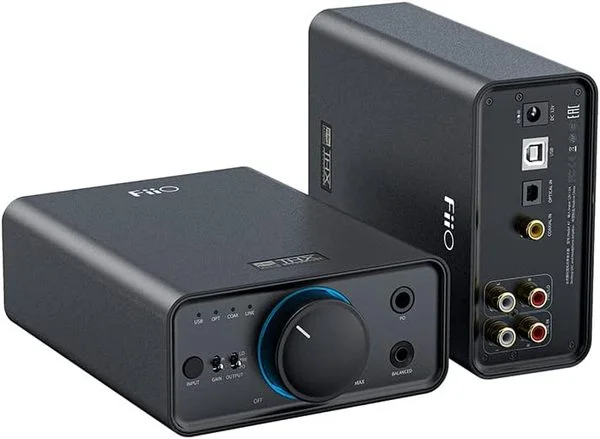
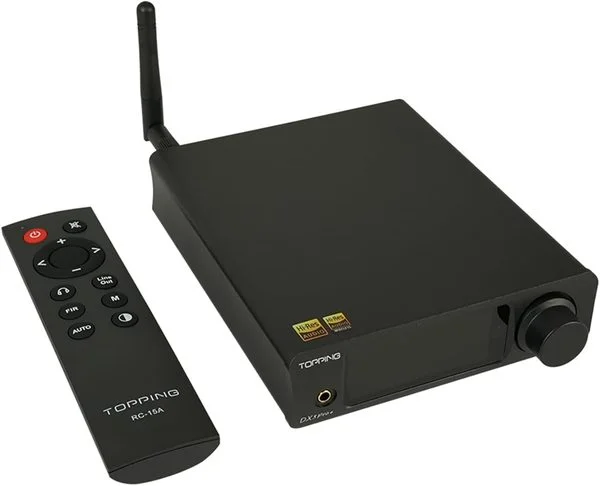
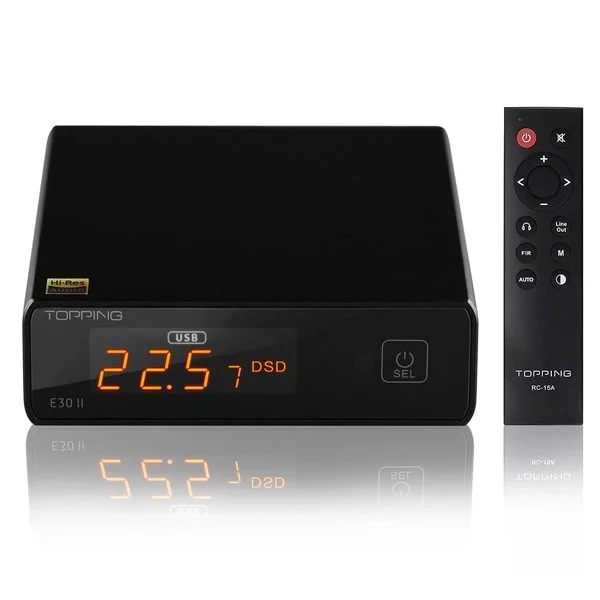
Current Topping budget DAC: dual AK4493S, remote with volume control, USB-powered.
Modi 5 vs E30 II: Specs
| Schiit Modi 5 | Topping E30 II | |
|---|---|---|
| Price | $149 | No verified price (check listing) |
| DAC chip | ESS ES9018 + Schiit Mesh filter | 2× AKM AK4493S |
| USB | Schiit Unison 384 (up to 32/384) | XMOS XU208 (up to 32/768, DSD512) |
| Other inputs | Optical, coaxial (up to 24/192) | Optical, coaxial |
| Output | RCA | RCA |
| Output level | 1.5V RMS on USB power, 2.0V with Linear Override wall-wart | 2.1V RMS |
| Remote / volume | No | Yes |
| Power | USB, optional AC wall-wart | USB |
Specs are from Schiit’s Modi 5 page and Topping’s published E30 II specs as listed by retailers.
Sound Quality
Both have clean published measurements. At this tier, owner and measurement-community consensus is that the differences between competent budget DACs are small next to the differences between headphones and amps. Buy on features, ecosystem and price.
Which Stack?
| Stack (new, Oct 2026) | Total |
|---|---|
| Schiit Modi 5 + Magni | $268 |
| Schiit Magni with DAC card (one box) | $199 |
| Topping E30 II + Magni or JDS Labs Atom Amp 2 | E30 II price + $119–129 |
Pair either DAC with the current Schiit Magni ($119; it replaced the Magni Heresy ) or the JDS Labs Atom Amp 2 (about $129). For headphone-specific amp picks, see the HD 600 , HD 650 and DT 990 Pro pairing guides.
See today's price for the Schiit Magni (Unity) on Amazon ↗ See today's price for the Schiit Magni (Unity) from Schiit ↗Legacy Comparison: Modi 3 vs Original E30
If you’re looking at used units, here’s how the older pair compares. Both are discontinued.
| Schiit Modi 3 / 3+ | Topping E30 (original) | |
|---|---|---|
| Status | Replaced by Modi 5 | Replaced by E30 II |
| DAC chip | AKM AK4490 | AKM AK4493 |
| Inputs | USB, optical, coaxial | USB, optical, coaxial |
| Output | RCA | RCA |
| Remote | No | Yes |
| Max sample rate | 24/192 | 32/768, DSD512 |
The same logic applies: both convert cleanly, the E30 had a remote and higher-rate file support, and the Modi stacked with Schiit amps. A working unit you already own is not worth replacing until you upgrade something else in the chain. For the full Schiit family tree, see every Schiit Modi generation compared .
Which to Buy
Buy the Schiit Modi 5 if:
- You’re pairing it with a Schiit Magni and want the matching stack
- You value US-based manufacturing and support
- You don’t need a remote
Buy the Topping E30 II if:
- You want a remote with volume control
- You play high-rate PCM or DSD files
- You’re pairing with a non-Schiit amp
At this price, the DAC is rarely the bottleneck. Spend the difference on the amp and headphones.