Published October 2026 · prices checked Oct 30, 2026. Research-based comparison: manufacturer specs, voltage math, published measurements and reviews, and owner reports. AmperHeads doesn’t bench-test or audition gear. How we research .
The Short Answer
The HD 550 is the best default of the three. At about $200 it costs the same as the HD 560S did a year ago, and the published measurements (RTINGS, Headphones.com) show the most even tuning of the trio. Buy the HD 560S if you’ll run it from a phone, dongle or PS5 controller, or if $20 matters: it’s the cheapest and the easiest to drive. Skip the HD 505 at its current $329.95, because that’s what Sennheiser US charges for the HD 600.
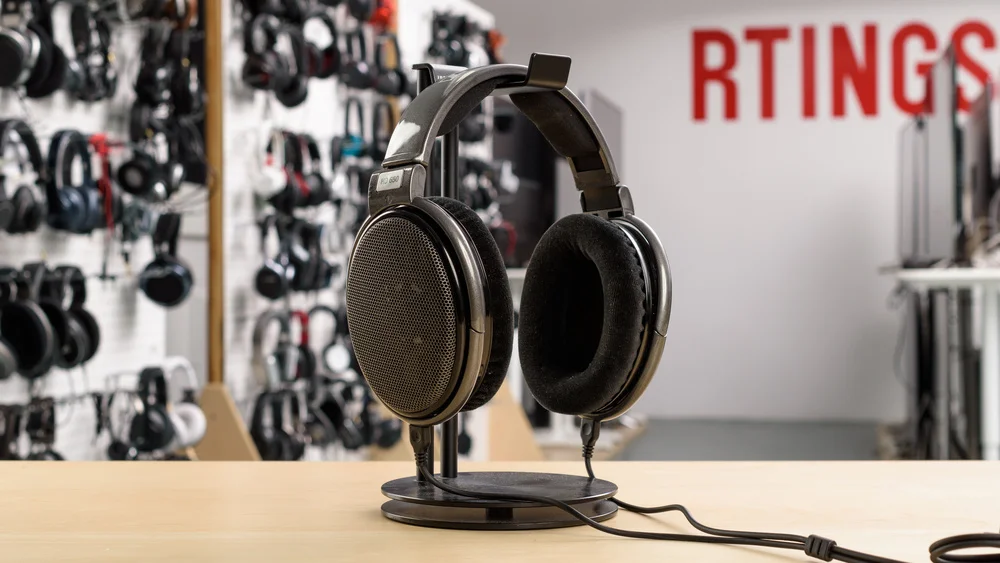
150Ω, 237 g, the most even measured response of the trio and EISA's Best Value Headphones 2025-2026. About 1.5 V for 110 dB peaks.
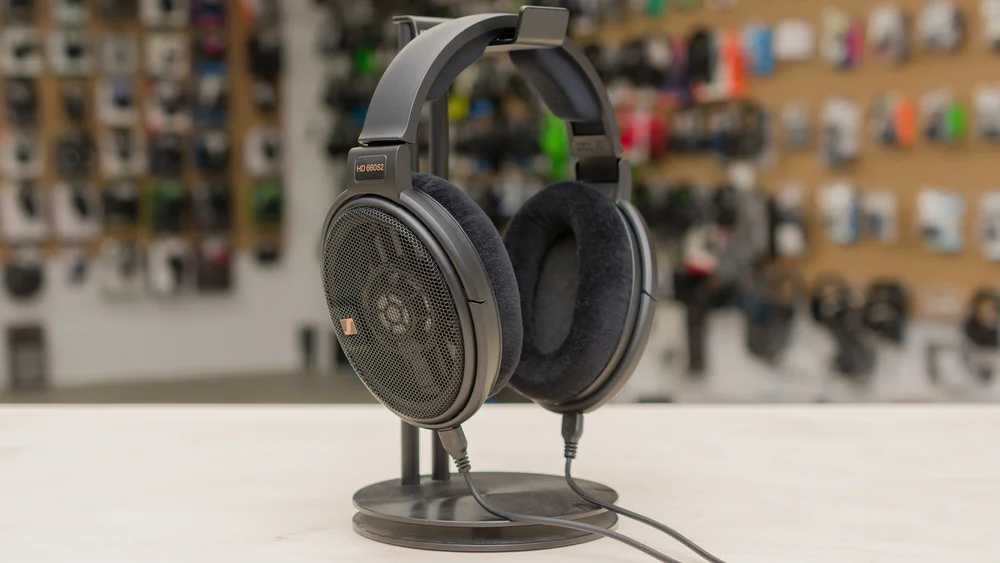
110 dB per volt, so a 1 V phone, dongle or controller jack reaches 110 dB peaks. Six years of owner history. A forward 4 to 5 kHz region is its known weak spot.
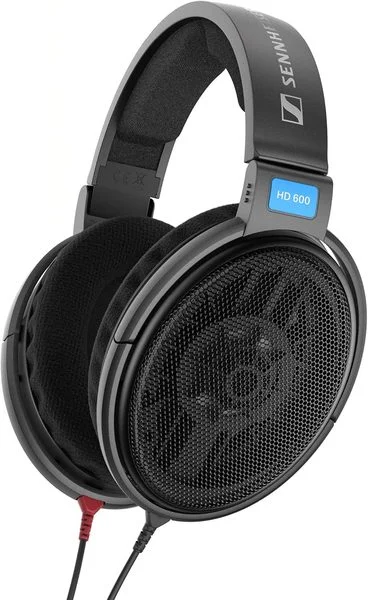
Sennheiser US sells it for $329.95, the same as the HD 505. Reviewers' safer, more natural tuning, but 300Ω, so plan on an amp.
These three look almost identical, and Sennheiser’s naming doesn’t help: the HD 505 has a lower number than the HD 550 and the HD 560S, yet sells for the most. Below is what each one actually is, the drive math, and what the measurements show.
Three Headphones, One Chassis
All three use Sennheiser’s HD 500-series frame: plastic, light, with angled drivers, velour pads and a detachable cable that locks into the left cup with a twist. Sennheiser says cables and pads swap between 500-series models without tools.
- HD 560S. Announced on September 24, 2020 at about $200 ($199.95 US, £169 UK) as a neutral reference for “analytical” listening. Sennheiser’s tagline is “Reveal the truth in your music.” The list price has since risen to $279.95, and Sennheiser US sells it for $179.95.
- HD 505. Announced on February 10, 2025. Sennheiser’s US announcement on Sonova’s site lists a $249.95 MSRP; the current Sennheiser newsroom copy reads $279.95, and the US store now charges $329.95. The US unit is the Copper Edition (article 700453), named for its color.
- HD 550. Announced on March 19, 2025 at $299.95, now listed at $349.95 and sold for $199.99 at Sennheiser US. Sennheiser pitches it to audiophiles and gamers and calls the tuning “revealing performance with effortlessly smooth tuning.” It won EISA’s Best Value Headphones award for 2025-2026.
So the oldest model is the cheapest, and the HD 550, the newest, sells for its biggest discount. Sennheiser has raised US list prices sharply since 2025, so judge any “sale” against these street prices, not the list price.
Specs Side by Side
| HD 560S | HD 505 | HD 550 | |
|---|---|---|---|
| Launched | September 2020 | February 2025 | March 2025 |
| Impedance | 120Ω | 120Ω | 150Ω |
| Sensitivity (Sennheiser) | 110 dB SPL at 1 V | 107.9 dB SPL at 1 V | 106.7 dB SPL at 1 V |
| Driver | Dynamic, polymer-blend membrane | Dynamic, custom 120Ω | Dynamic, custom 38 mm, made in Tullamore, Ireland |
| Frequency response (rated) | 6 Hz to 38 kHz | 12 Hz to 38.5 kHz | 6 Hz to 39.5 kHz |
| THD (rated, 1 kHz / 90 dB) | <0.05% | <0.2% | <0.2% |
| Weight | 240 g without cable (Sennheiser US lists 280 g) | 237 g without cable | 237 g |
| Cable | 1.8 m, 3.5 mm plug (launch boxes: 3 m, 6.3 mm plug) | 1.8 m, 3.5 mm plug | 1.8 m, 3.5 mm plug |
| In the box | Cable, 6.3 mm adapter, drawstring bag | Cable, 6.3 mm screw-on adapter, drawstring bag | Cable, 6.3 mm screw-on adapter, drawstring bag |
| Price (Oct 2026) | ~$180 ($279.95 list) | ~$330 | ~$200 ($349.95 list) |
Two notes on the table. The HD 560S launched with a 3 m cable ending in a 6.3 mm plug plus a short 3.5 mm adapter; Sennheiser US now lists a 1.8 m cable with a 3.5 mm plug, so the box depends on the batch. And the rated frequency ranges and THD figures don’t tell you how any of them sound. The useful numbers are sensitivity and impedance, which decide what you can plug them into.
None of the three ships with a balanced cable, and none needs the extra voltage a balanced output provides.
Drive Requirements: The Voltage Math
Sennheiser publishes all three sensitivities in dB SPL at 1 V, so no conversion is needed.
Method. Voltage for a target SPL: V = 10^((SPL − S_dBV)/20). The target is 110 dB peaks, the same as on every page here, which corresponds to loud listening with dynamic music averaging roughly 90 to 95 dB. Doubling the voltage adds 6 dB of headroom. The output-impedance limit uses the common Z/8 rule for a flat bass response.
| Headphone | Sensitivity (dB/V) | Voltage for 110 dB peaks | Current | Power | With 6 dB headroom | Max source output impedance (Z/8) |
|---|---|---|---|---|---|---|
| HD 560S (120Ω) | 110 | ~1.0 V | ~8 mA | ~8 mW | ~2.0 V | ≤15Ω |
| HD 505 (120Ω) | 107.9 | ~1.3 V | ~11 mA | ~13 mW | ~2.5 V | ≤15Ω |
| HD 550 (150Ω) | 106.7 | ~1.5 V | ~10 mA | ~14 mW | ~2.9 V | ≤19Ω |
| HD 600 (300Ω), for scale | ~102 | ~2.5 V | ~8 mA | ~20 mW | ~4.9 V | ≤37Ω |
The HD 600 row uses the 97 dB/mW figure our HD 600 amp pairing guide works from, which converts to about 102 dB/V.
Real sources, calculated
Headroom = 20·log10(available ÷ required) against 110 dB peaks. Positive means you can reach that level; negative means you can’t. Source voltages are the typical or manufacturer-derived figures used across this site. These are calculations, not measurements.
| Source | Approx. output | HD 560S | HD 505 | HD 550 | HD 600 |
|---|---|---|---|---|---|
| Phone jack / USB-C dongle | ~1 V or less | ≈ 0 dB | ≈ −2 dB | ≈ −3.5 dB | ≈ −8 dB |
| PS5 DualSense controller jack | ~1 V or less | ≈ 0 dB | ≈ −2 dB | ≈ −3.5 dB | ≈ −8 dB |
| Focusrite Scarlett 2i2 4th gen | ~1.7 V | ≈ +4.5 dB | ≈ +2.5 dB | ≈ +1 dB | ≈ −3 dB |
| FiiO K11 R2R (6.35 mm) | ~3.9 V | ≈ +12 dB | ≈ +10 dB | ≈ +8.5 dB | ≈ +4 dB |
| Schiit Magni (Unity) | ~9 V or more | ≈ +19 dB | ≈ +17 dB | ≈ +16 dB | ≈ +11 dB |
What this means in practice:
- None of the three needs an amp for normal listening. From a 1 V jack the HD 560S peaks at about 110 dB, the HD 505 at about 108 dB and the HD 550 at about 107 dB. A 3 dB shortfall means the volume sits near the top and the loudest peaks flatten, not that the headphone sounds quiet.
- The HD 560S is the only one with zero shortfall from a phone, dongle or controller. If that’s your whole setup, it’s the one to buy.
- A cheap desktop amp fixes the gap for all three. The full amp math for the most sensitive one is in our HD 560S amp guide , and the general case is in do I need a headphone amp?
- The HD 600 is the one that truly needs an amp. From a 1 V jack it peaks around 102 dB.
SoundGuys reached the same conclusion for the HD 505: “you probably don’t need an amplifier,” though an amp helps if you add EQ boosts. On the HD 550, Headphones.com’s measurements note an impedance bump that sits a little above the 150Ω rating, so a high-impedance laptop jack shifts its response more than a low-impedance dongle does.
Tuning: What’s Verifiable
Measurement coverage is uneven. The HD 560S has six years of data; the two 2025 models have a handful of reliable sources. When we checked (October 2026) we found RTINGS reviews of the HD 560S and HD 550 but not the HD 505, Headphones.com measurement threads for the HD 550 and HD 505, and no Audio Science Review reviews of either 2025 model.
HD 560S: neutral, with a forward 4 to 5 kHz region
- Crinacle (November 2020) graded its tonality A+ and its overall grade B, called its value “redefines the price bracket,” and said that “at its very best, the HD560S trade blows with the HD6X0.” His main caveat: the “5k-ish boost gets a little intense and harsh at times.” He also found the sub-bass “rather limp.”
- RTINGS describes a flat, accurate profile that lacks a little low bass, with “a few unruly peaks in the treble range.”
- HiFi Oasis (July 2025) calls it neutral-bright and says the 5 kHz boost “can be too intense for long listening sessions.”
The consistent finding: a very good midrange and a lower-treble lift that some ears find fatiguing.
HD 505: lean and analytical
- Headphones.com (measured on a B&K 5128, February and March 2025) found good sub-bass extension with no bass emphasis, “considerably less bloom” in the low mids than an HD 650, “more like HD 600,” a bit of extra 2 kHz relative to the 6-series, and a resonance near 5.5 kHz that gives a “dry, papery timbre.” The reviewer liked it more than the HD 560S, but said the HD 600 is the safer pick for most listeners and called the HD 6XX “a pretty indisputably better value.”
- SoundGuys (February 2025) measured the 3 kHz region about 4 dB above its target, emphasized treble, and rolled-off lows typical of open-backs.
- HiFi Oasis calls it “the clearest analytical sound” of the 500 series, with treble that “occasionally becomes harsh.”
HD 550: the most even of the three
- RTINGS found the HD 550 and HD 560S close, with the same low-bass roll-off, but the HD 550 has “a slightly more even mid and treble response,” extends a little deeper in the bass and tracks the treble target more closely.
- Headphones.com (March 2025) said “the HD 550 fixes every major tonal issue I have with the HD 560S,” described it as “essentially the same tuning as HD 600 under 500 Hz” with better extension below 100 Hz, and credited its reduced 2 to 5 kHz range compared with the HD 505. The reviewer still heard a lower-treble lift around 5 to 6 kHz.
- HiFi Oasis describes “deeper, more physical bass” and “smoother” treble than the HD 560S.
Put simply: the HD 560S and HD 505 share a brighter upper midrange, and the HD 550 tones it down. If the HD 560S’s 5 kHz reputation is what’s stopping you, the HD 550 is the measured answer.
Is the HD 505 the New HD 6XX?
This is the question behind a lot of HD 505 searches, because the HD 58X Jubilee and the HD 6XX were the classic “cheap HD 600-family” buys through Drop, and Drop closed on March 31, 2026.
Sennheiser doesn’t position it that way. Its launch material calls the HD 505 “the gateway to audiophile excellence,” says it’s “built upon the trusted HD 500 series chassis,” and doesn’t mention the HD 600, HD 650, HD 6XX or HD 58X. It’s a 120Ω driver in a 237 g HD 500-series frame, not a 300Ω or 150Ω 600-series driver in the HD 600 headband.
Reviewers drew the comparison anyway. Headfonics says it isn’t as accurate as the HD 600 series but is “the closest in that respect within the HD 500 line,” and TechRadar’s launch piece compared it directly with the HD 600. Headphones.com’s measurements back the “more HD 600 than HD 650” reading in the low mids, but its reviewer still preferred the HD 600 for most people.
Two practical facts settle it in October 2026:
- The HD 6XX is still on sale. Sennheiser US lists it at $199.95 (regular $219.95). Since Drop closed, Sennheiser US is the only new source we know of, and we can’t tell how long stock lasts. It’s an HD 650-family 300Ω headphone, so it needs an amp.
- The HD 600 costs the same as the HD 505. Both are $329.95 at Sennheiser US. The HD 600 is the headphone the HD 505 gets compared to.
For anyone who wanted the HD 58X or HD 6XX sound, the honest options are the last HD 6XX stock plus an amp, the HD 600, or the HD 550 as the closest no-amp alternative below 500 Hz. Owners of a used HD 58X can find amp picks in the HD 58X pairing guide .
What Owners Say (as of October 2026)
This is a summary of forum and user-review threads (Headphones.com community, Head-Fi user reviews), not our own listening.
- HD 560S: The most common complaint over six years is the 4 to 5 kHz glare on bright recordings, followed by a lean low end on bass-heavy genres. Comfort and the light weight get consistent praise. Reviewers who compared all three (HiFi Oasis, Head-Fi user reviews) describe a firmer clamp than on the two 2025 models.
- HD 550: Early owners mostly describe it as the HD 560S with the edge taken off. One Headphones.com user comparing the two (May 2025) said the calmer lower treble makes the HD 550’s 7 to 8 kHz peak more noticeable, so it isn’t treble-free. Several Head-Fi user reviews rate it the better buy of the two 2025 models.
- HD 505: Opinions split. Fans like its clarity for detail listening and games; critics point to the price. A Headphones.com user asked why it costs more than an HD 6XX “while offering a seemingly similar sound signature.” That was at the launch price, and the gap is wider now.
The same caution applies to all three: forum feedback on the 2025 models is thinner than on the HD 560S, and treble can vary from unit to unit (Crinacle flagged this for the HD 560S).
Use Cases
| Use | Better pick | Why |
|---|---|---|
| Phone, dongle or laptop, no amp | HD 560S | Reaches 110 dB peaks from ~1 V; the others fall 2 to 3.5 dB short |
| PS5 / Xbox controller | HD 560S | Same ~1 V math; the HD 550 is fine at normal levels with the volume high |
| Long sessions, sensitive to treble | HD 550 | Reduced 2 to 5 kHz region per Headphones.com; smoother treble per reviewers |
| Desk with a desktop amp | HD 550, or the HD 600 if budget allows | Drive stops mattering; pick on tuning |
| Classical and acoustic | HD 550 or HD 560S | Accurate mids on both; the HD 600 is the reference step up |
| Lean, detail-first sound | HD 505, only on a deep sale | The most analytical of the three, but $329.95 is HD 600 money |
| Smallest budget | HD 560S | ~$180, the lowest street price of the three |
For a wider field at this price, see the best open-back headphones under $200 , and for console setups specifically, the wired headphones for PS5 guide . If you listen mostly to orchestral and chamber music, our classical music headphone picks cover the HD 560S and HD 600 in that context.
Which Should You Buy?
Buy the HD 550 if:
- You want the best-measured tuning of the three for about $200
- The HD 560S’s treble reputation worries you
- You own, or might buy, a desktop amp or DAC/amp (it’s the one that benefits most)
HD 550 (~$200, Oct 2026): See today's price for the Sennheiser HD 550 on Amazon ↗
Buy the HD 560S if:
- Your sources are a phone, a dongle, a laptop or a PS5 controller, and you won’t buy an amp
- You want the lowest price, about $180
- You want the model with the longest measurement and owner record
HD 560S (~$180, Oct 2026): See today's price for the Sennheiser HD 560S on Amazon ↗
Buy the HD 505 if:
- You find it well under $300 and like a lean, analytical presentation
- You want slightly more level than the HD 550 from a phone or dongle (about 1 dB)
HD 505 (~$330 at Sennheiser US, Oct 2026): See today's price for the Sennheiser HD 505 on Amazon ↗
Step up to the HD 600 if: your budget reaches $330 and you’ll add an amp. It costs the same as the HD 505 and is the headphone reviewers keep using as the reference for all three. The FiiO K11 R2R at about $170 drives it with about 4 dB of headroom; the HD 600 vs HD 650 comparison covers the next decision.
HD 600 (~$330, Oct 2026): See today's price for the Sennheiser HD 600 on Amazon ↗
Or grab the last HD 6XX if you want HD 650-family warmth for $199.95 and will run it from an amp. Stock at Sennheiser US is the only new supply we know of.
$199.95 at Sennheiser US in October 2026. 300Ω, so it needs about 2.5 V and a desktop amp.
If your budget stretches to $300 and you’d rather look beyond Sennheiser, our best headphones under $300 list covers the planar and closed-back options.
Sources
- Sennheiser US, HD 550 product page (150Ω, 106.7 dB at 1 V, 237 g, 1.8 m cable, box contents, $199.99 / $349.95 list)
- Sennheiser US, HD 560S product page (120Ω, 110 dB at 1 V, <0.05% THD, 280 g listed, 1.8 m cable, $179.95 / $279.95 list)
- Sennheiser US, HD 505 product page (120Ω, 107.9 dB at 1 V, 237 g without cable, Copper Edition 700453, $329.95)
- Sennheiser US, HD 600 product page ($329.95 / $499.95 list) and HD 6XX product page ($199.95 / $219.95)
- Sennheiser newsroom, HD 550 announcement (March 19, 2025, $299.95, 38 mm Tullamore driver)
- Sennheiser newsroom, HD 505 announcement and Sonova, HD 505 release (February 10, 2025, HD 500 chassis, $249.95 MSRP)
- Sennheiser newsroom, HD 560S announcement (September 24, 2020, 3 m cable with 6.3 mm plug)
- EISA, Sennheiser HD 550 award (Best Value Headphones 2025-2026)
- RTINGS, HD 550 review and HD 560S review
- Headphones.com community, HD 550 measurements and discussion and HD 505 Copper Edition measurements and discussion
- Crinacle, Sennheiser HD560S review (November 2020)
- SoundGuys, HD 505 review (SoundGuys) (February 2025)
- HiFi Oasis, Complete Sennheiser HD 500 series breakdown (July 2025)
- Headfonics, HD 505 review (Headfonics)
- TechRadar, HD 505 launch and HD 600 comparison