Updated October 2026 · prices checked Oct 10, 2026.
The Short Answer
The HD 600 is the more neutral, more accurate reference. The HD 650 is warmer, richer in the bass and lower mids, and what most owners call the more relaxing listen. Both are 300Ω and need a proper amplifier.
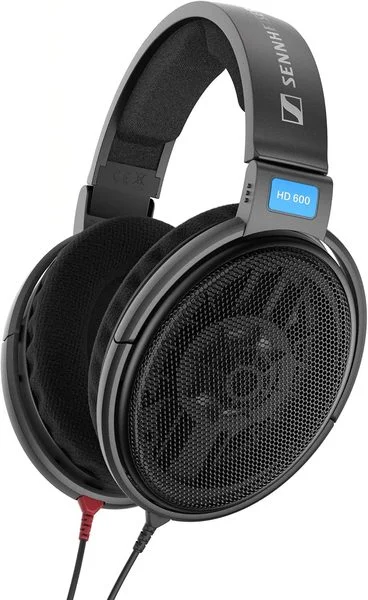
The neutral reference since 1997. Works across genres and for mixing.
Warmer, more intimate voicing for long sessions and vocal music. On sale it costs only a little more than the HD 600.
Want the HD 650 sound for less? The HD 6XX (Drop’s HD 650 variant) is still sold by Sennheiser US at $219.95 while the last stock lasts: See today's price for the Sennheiser HD 6XX from Sennheiser ↗
Specs Side by Side
| Sennheiser HD 600 | Sennheiser HD 650 | |
|---|---|---|
| Impedance | 300Ω | 300Ω |
| Sensitivity | 97 dB/mW | 97 dB/mW |
| Frequency response | 12–39,000 Hz | 10–41,000 Hz |
| Weight | 260 g | 260 g |
| Cable | Detachable, dual-sided | Detachable, dual-sided |
| Price (Oct 2026) | ~$350 on sale ($499.95 list) | ~$380 on sale ($579.95 list) |
Sound Signature: The Key Differences
The descriptions below summarise published frequency-response measurements and decades of owner consensus on Head-Fi and r/headphones. They are not personal listening notes.
HD 600: The Neutral Reference
The HD 600 has been a go-to reference for audio engineers and serious listeners since 1997. Its measured response sits closer to neutral targets than most headphones: a gentle bass roll-off below about 50 Hz, smooth mids, and a controlled treble with an upper-midrange presence region around 3 kHz.
Owners describe accurate instrument placement, natural vocal clarity, and a stage that is moderate in width but precise. Some find its treble slightly grainy on bright masters at high volume, which is a long-standing, well-documented complaint.
HD 650: The Warm Classic
The HD 650 shifts the HD 600’s character warmer. Bass has more presence, the upper bass and lower mids are fuller, and the treble rolls off earlier, giving a darker, more intimate presentation.
For years forums described a “veil” on the HD 650. Most owners now attribute that reputation to underpowered sources. On a proper amp it resolves detail; it frames it in warmth.
The HD 650 is a classic match for output-transformerless (OTL) tube amps, which suit 300Ω loads. Owners often call that pairing their favourite for long sessions.
Amp Pairing: The Math
Both headphones measure at roughly 102–103 dB/V, so they need about 2.2–2.5 V for 110 dB peaks and twice that for 6 dB of headroom. A phone or laptop jack gives around 1 V, which is why both sound flat and quiet from one.
| Amp (published spec) | Output into ~300Ω | Headroom over 110 dB peaks |
|---|---|---|
| FiiO K11 R2R, single-ended | ~4 V (50–59 mW) | ~+4 dB |
| FiiO K11 R2R, 4.4 mm balanced | ~8 V (220–250 mW) | ~+10 dB |
| Schiit Magni (Unity) | ~11 V (415 mW) | ~+13 dB |
Calculated from the makers’ power ratings; not measured.
One-box DAC/amp. Loud enough single-ended; balanced with an aftermarket 4.4 mm cable gives real headroom.
Clean solid-state amp with about 11 V into 300Ω. $199 with Schiit's DAC card.
Schiit's OTL tube amp: suits 300Ω Sennheisers (not planars or low-impedance headphones), especially the HD 650.
Full rankings: best amp for the HD 600 and best amp for the HD 650 .
Use Cases
| Use Case | Better Pick |
|---|---|
| Classical, acoustic, jazz | Either: HD 600 for detail, HD 650 for warmth |
| Rock, pop, electronic | HD 650 |
| Reference / mixing | HD 600 |
| Long listening sessions | HD 650 |
| Gaming | HD 600 |
| Tube amp pairing | HD 650 |
| Vocal-centric music | HD 650 |
| Multi-genre versatility | HD 600 |
The “Veil” Debate
The HD 650 “veil” is largely a myth once the headphone is properly driven. Level-matched comparisons on a decent amp show the HD 650 is not missing detail; it is voiced warmer.
Where the argument has some merit: at loud volumes on bass-heavy music, the HD 650’s warmer bass shelf can mask some low-midrange detail that the HD 600’s flatter response keeps distinct.
Which Should You Buy?
Buy the HD 600 if:
- You want the more accurate, neutral sound
- You mix, produce, or do critical listening
- You listen across many genres
- You plan to use a solid-state amp
Buy the HD 650 if:
- You know you like a warm, musical signature
- You listen mostly to jazz, rock or vocal music
- You want to pair with an OTL tube amp
- You want the least fatiguing option for long sessions
Skip both if: you need isolation, or you will only ever listen from a phone.
Both are classics. The question is which colour you want.
Sennheiser HD 600: See today's price for the Sennheiser HD 600 on Amazon ↗
Sennheiser HD 650: See today's price for the Sennheiser HD 650 on Amazon ↗
If you’re weighing a step up instead, see HD 600 vs HD 660S2 .