The Short Answer
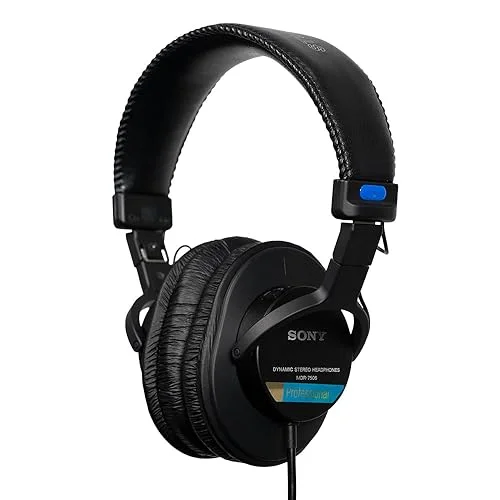
- Choose the Sony MDR-7506 — if you do broadcast, video, or audio production work and need a field-reliable analytical monitor
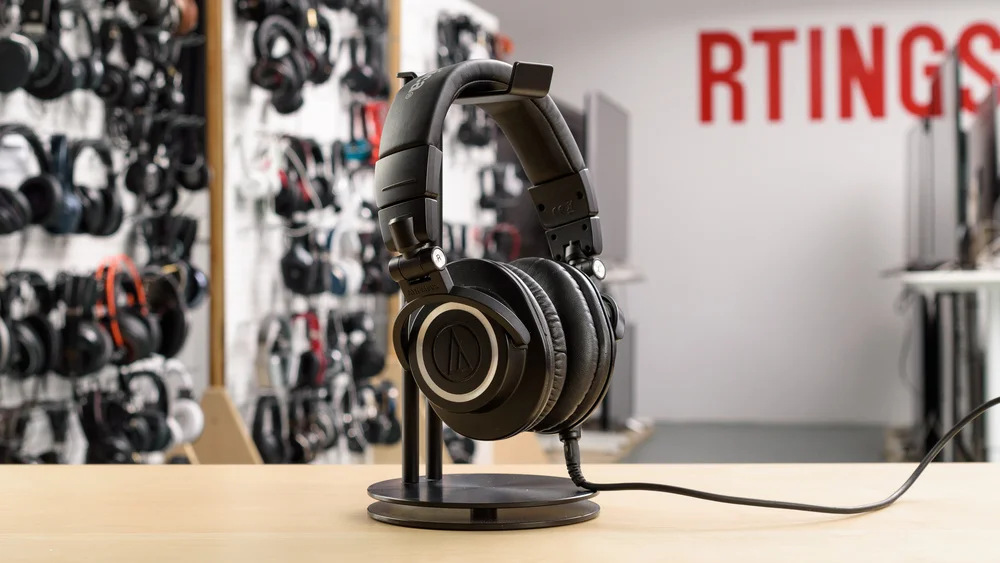
- Choose the ATH-M50x — if you want a better all-around headphone for music listening, portability, and everyday use with detachable cables
Both are good. They serve different primary use cases.
Updated October 2026 · prices checked Oct 10, 2026.
The field-proven monitor since 1991, under $100, and easy to drive from a camera or mixer.
Warmer, less fatiguing tuning and three detachable cables. ~$150–160 in Oct 2026.
Newer option: Sony’s MDR-M1 (launched October 2024 at $249.99) is the modern studio closed-back from the same family. It costs much more, but it is the one to look at if you want a current Sony monitor. See today's price for the Sony MDR-M1 on Amazon ↗
Side by Side
| Sony MDR-7506 | ATH-M50x | |
|---|---|---|
| Price (Oct 2026) | Under $100 | ~$150–160 |
| Impedance | 24Ω or 63Ω (Sony’s own spec sheets differ by region) | 38Ω |
| Sensitivity | 106dB/mW | 99dB/mW |
| Driver Size | 40mm | 45mm |
| Cable | Coiled, fixed, ~3m | Detachable, three cables included |
| Folds | Yes, flat | Yes, flat |
| Weight | 230g | 285g |
| Included Pouch | Yes | Yes |
| Needs Amp | No | No |
Sound: Lean Honesty vs Pleasant Warmth
The descriptions below summarise published frequency-response measurements and long-running owner consensus, not personal listening notes.
The MDR-7506 and ATH-M50x represent two different philosophies for what a “studio monitor” headphone should sound like.
Sony MDR-7506 sound signature: Lean bass with a roll-off below 50Hz. Clean, honest midrange. Prominent treble peak at 8–10kHz that makes transients and sibilance obvious. The sound is analytical — designed to expose problems in recordings rather than flatter music during listening. This is why it has been a broadcast standard for 35 years.
ATH-M50x sound signature: Mid-bass emphasis around 80–100Hz adds warmth and body. Clean upper midrange with good presence for vocals. Treble is extended but without the MDR-7506’s prominent peak. The result is a more enjoyable, slightly coloured listen — warm enough to be pleasant, detailed enough to be useful.
Owners put it this way: the MDR-7506 makes poor recordings sound worse. The ATH-M50x will make them sound more palatable. For monitoring work, the MDR-7506’s honesty is the point. For music listening, the ATH-M50x’s warmth is the point.
For Music Production
This is where the comparison is most debated.
The MDR-7506 is favoured for dialogue editing, podcast monitoring, and broadcast — where the upper-mid and treble accuracy is useful for catching breath sounds, pops, and sibilance. For mixing music, its lean bass means you may undercompensate on low-end, producing mixes that sound bass-heavy on other systems.
The ATH-M50x is often recommended for beginner producers, but its mid-bass bump has the opposite problem: you may cut bass in your mix to compensate, producing thin-sounding results on other systems.
Neither is a perfect mixing reference. If your primary use is music production, consider the Sennheiser HD 280 Pro or AKG K371, which have flatter measured responses than either.
For broadcast, podcast recording, and video production monitoring, the MDR-7506 wins on heritage, field reliability, and sound signature designed specifically for dialogue.
For Everyday Music Listening
The ATH-M50x wins here. The warmer tuning and more extended bass make music listening more enjoyable over long sessions. The MDR-7506’s treble peak can cause listening fatigue on bright or compressed recordings — playlists that include modern pop, electronic music, or heavily mastered tracks will occasionally produce harsh transients that the ATH-M50x handles with more grace.
Cable System
The ATH-M50x ships with three detachable cables: a coiled cable (like the MDR-7506), a short straight cable for portable use, and a long straight cable for desk use. The detachable system means you can replace a worn cable, choose the length you need, and buy aftermarket cables.
The MDR-7506 has a fixed coiled cable that extends to approximately 3m. For studio and broadcast use, the coiled cable is practical — compact at rest, long enough to reach a monitor. For portable use or desk setups where you prefer a straight cable, it is a limitation.
Portability and Build
Both headphones fold flat for storage. The MDR-7506 collapses slightly smaller and is lighter (230g vs 285g). Both come with a carrying pouch.
The MDR-7506 has decades of field use behind it: camera crews, broadcast engineers and journalists have relied on it since the early 1990s. The ATH-M50x has good build quality but is a desk-oriented headphone that happens to fold.
If your use case involves carrying headphones through airports, production sets, or varied environments, the MDR-7506’s lighter weight and proven field durability give it a practical edge.
Amplification
Neither needs an amp. At 106 dB/mW the MDR-7506 is one of the easiest headphones to drive. It runs loud from a phone, camera, laptop or mixer. The ATH-M50x at 38Ω and 99dB sensitivity is similarly easy. Both work without a dedicated amplifier. If you want a cleaner desktop source anyway, our ATH-M50x amp pairing guide covers the cheap options that also suit the MDR-7506.
Price
In October 2026 the MDR-7506 sells for under $100 and the ATH-M50x for about $150–160. That is a meaningful gap. If budget is the main factor, the MDR-7506 gives up nothing in reliability or monitoring ability.
The ATH-M50x justifies its higher price with detachable cables, a more pleasant listening experience, and better long-session comfort.
Which Should You Buy?
Buy the Sony MDR-7506 if:
- You work in broadcast, video, podcast, or audio production
- You want a field-reliable studio standard that works from any source
- Budget is limited: under $100 vs ~$150–160 is a real difference
- You value decades-proven durability
Buy the ATH-M50x if:
- You want a better everyday music listening headphone
- Detachable cables are important to you
- You prefer a warmer, less fatiguing sound signature
- You want a more comfortable headphone for multi-hour sessions
Skip both if: you want a flat mixing reference (see above), or you need noise cancelling for travel.
Sony MDR-7506: See today's price for the Sony MDR-7506 on Amazon ↗
Audio-Technica ATH-M50x: See today's price for the Audio-Technica ATH-M50x on Amazon ↗