Updated October 2026 · prices checked Oct 10, 2026.
These two were the default all-in-one DAC/amps under $200 for a couple of years. Both are now late in their lives: the FiiO K7 has dropped off FiiO’s website but is still sold on Amazon US at about $220, and retailers are listing the Topping DX3 Pro+ as discontinued, with the DX5 II as Topping’s current one-box pick.
Quick Verdict
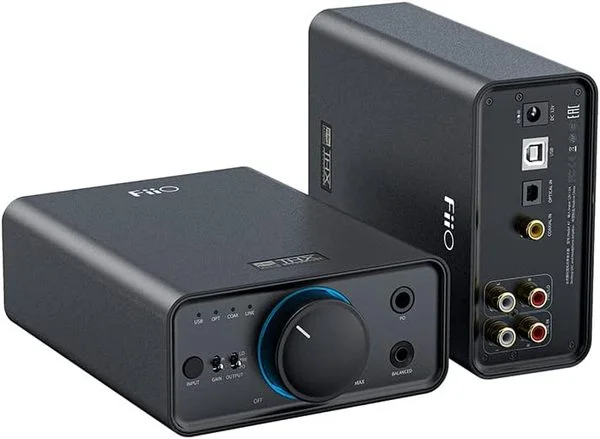
- Buy the FiiO K7 if you listen wired from a computer, want a 4.4mm balanced output, and drive 300Ω Sennheisers or planars.
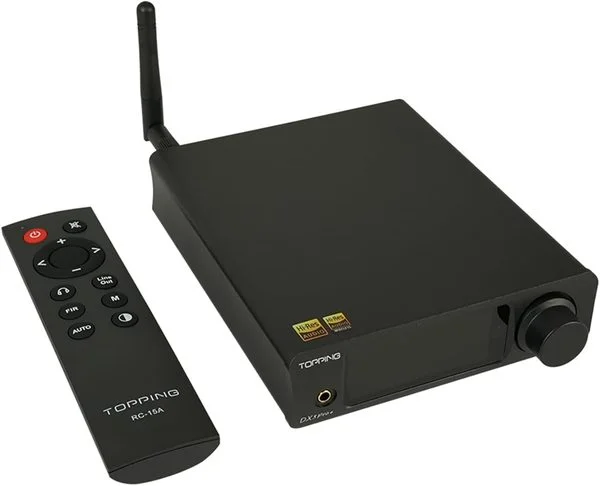
- Buy the Topping DX3 Pro+ only if you find leftover stock at a clear discount and want Bluetooth LDAC and a remote for easy-to-drive headphones.
- Neither: buy current. The FiiO K11 R2R costs less than the K7 today and is FiiO’s current entry model; the Topping DX5 II replaces the DX3 Pro+ with Bluetooth and much more power.
Still sold, and the strongest wired option of these two: 4.4mm balanced, 2 W into 32Ω, RCA in and preamp out.
The DX3 Pro+ replacement if you want Bluetooth LDAC and a remote, with about 6.4 W balanced into 32Ω.
FiiO's current entry desktop DAC/amp at about $170, below what the K7 sells for now.
Specs Comparison
| Topping DX3 Pro+ | FiiO K7 | |
|---|---|---|
| Status (Oct 2026) | Being phased out | Off fiio.com, still on Amazon US |
| Price | Leftover stock only | ~$220 |
| DAC chip | ESS ES9038Q2M | 2× AKM AK4493SEQ |
| Amp stage | Not specified here | 2× THX AAA 788+ |
| Rated power (32Ω) | ~1.8W (SE) | 2,000mW balanced, ~1.2W SE |
| Rated power (300Ω) | ~250mW (one listing: 160mW) | 560mW balanced |
| Headphone outputs | 6.35mm SE | 6.35mm SE + 4.4mm balanced |
| Digital inputs | USB, optical, coaxial | USB, optical, coaxial |
| Analog input | No | RCA line in |
| Line out | RCA | RCA, fixed (LO) or variable (PRE) |
| Bluetooth | 5.0 (LDAC, aptX HD, AAC) | No (separate K7BT variant has it) |
| Remote control | Yes | No |
Power figures are the manufacturers’ published ratings as reproduced by retailers and reviewers, not our measurements. An earlier version of this page listed the K7 with Bluetooth; the standard K7 has none.
Sound
Both have clean published measurements, and at these distortion levels the amp stage rarely decides how a headphone sounds. Owners tend to describe the AKM-based K7 as a touch smoother and the ESS-based DX3 Pro+ as a touch more forward in the treble; with bright headphones like the DT 990 Pro, that is the direction to lean. Treat it as a small effect next to the headphone itself.
Where the K7 has a practical advantage is reserve. Its balanced output has more voltage for 300Ω Sennheisers and more current for planars like the HiFiMAN Sundara or Audeze LCD-2.
Features That Matter
FiiO K7:
- 4.4mm balanced output: the full 2W rating; aftermarket balanced cables exist for the HD 600, HD 650, Sundara and most popular headphones.
- RCA line input: use it as a headphone amp for another DAC or analog source.
- Rear RCA output with LO/PRE modes: fixed level for an external amp, or volume-controlled for powered speakers.
Topping DX3 Pro+:
- Bluetooth LDAC: stream from a phone without a cable.
- Remote: volume and input from your chair.
- Smaller footprint.
Headphone Fit
| Headphone | DX3 Pro+ | FiiO K7 |
|---|---|---|
| Sennheiser HD 600/650 (300Ω) | Good | Very good (balanced) |
| Beyerdynamic DT 990 Pro (250Ω) | Good | Very good |
| HiFiMAN HE400SE | Good | Very good |
| HiFiMAN Sundara | Good | Very good |
| Audeze LCD-2 | Adequate | Good |
| IEMs, ATH-M50x, DT 770 Pro 80Ω | Very good | Very good |
These ratings are calculated from the published power and the headphones’ published sensitivity, not from listening sessions. For headphone-specific picks see the HD 600 , HD 650 , DT 990 Pro and Sundara pairing guides.
Which to Buy
Buy the FiiO K7 if:
- You listen wired and want balanced output
- You drive 300Ω dynamics or planars
- You want an RCA input or a preamp output for powered speakers
Buy the Topping DX5 II instead of the DX3 Pro+ if:
- You need Bluetooth LDAC and a remote
- You want the most power in this group
Consider the K11 R2R or K13 R2R if you’d rather buy a model FiiO still lists. The FiiO K7 review covers how the K7 compares with both.